An employee exit procedure is much more than a simple checklist for when someone leaves. It’s a structured process that kicks in the moment a team member resigns, guiding everything from their final paycheck to shutting down their access and, crucially, making sure their knowledge doesn't walk out the door with them. Especially for startups and BPOs, getting this wrong is a huge business risk.
Why a Standardized Employee Exit Procedure Matters
How you handle an employee’s departure says everything about your company. For fast-paced startups and BPOs, a messy exit isn't just an administrative pain—it’s a serious liability. It’s all too easy to treat offboarding as a low-priority task, but the consequences of a sloppy process can hit you hard.
Think about it. What happens when a former sales rep who just joined a competitor still has access to your CRM? They could walk away with your entire client list. Or consider a project manager leaving without a proper handover, grinding a critical project to a halt. These aren't just hypotheticals; I’ve seen situations like this play out, and they are common side effects of a neglected offboarding plan.
Protecting Your Business Operations
A structured process is your first line of defense. It’s what protects sensitive client data, keeps you compliant with payroll and legal rules, and helps maintain the company culture you've worked so hard to build. For businesses in shared or leased workspaces, the stakes are even higher. You absolutely need a procedure to ensure former employees can’t get back into the building, protecting not only your own assets but those of the other companies around you.
The reality is, most businesses are dangerously unprepared for this. Alarming research shows only 29% of companies even have a formal offboarding process. The numbers get worse: a mere 5% have automated it, and a staggering 20% have suffered security breaches because of former employees. These stats, highlighted in Jobera's research on offboarding preparedness, paint a clear picture of a widespread vulnerability.
A strong employee exit procedure isn't just HR paperwork; it's a strategic necessity. You're not just saying goodbye—you're protecting your data, your clients, and the stability of your entire operation.
The True Cost of Poor Offboarding
Without a clear plan, you're leaving your company exposed to risks that can cause real financial and reputational damage. These aren't just minor headaches.
- Security Vulnerabilities: Lingering access is a ticking time bomb. This applies to everything from email and cloud drives to your CRM and Slack channels.
- Knowledge Loss: When someone leaves, years of institutional knowledge can vanish overnight. This creates massive inefficiencies as the remaining team is forced to figure things out all over again.
- Compliance and Legal Issues: Getting the final paycheck, benefits continuation (like COBRA), and other legal details wrong can easily lead to costly lawsuits and fines.
- Damaged Employer Brand: A chaotic or disrespectful exit is a surefire way to tarnish your reputation. People talk, and a bad offboarding experience can hurt your ability to hire great talent down the road.
Ultimately, a standardized exit procedure is a core business function. It transforms a potentially disruptive event into a controlled and professional transition, protecting your company from every possible angle.
Handling the Resignation with Professionalism
The moment an employee gives you their notice, the clock starts ticking on your employee exit procedure. How you react in these first few minutes sets the tone for the entire offboarding process, impacting everything from knowledge transfer to your company’s reputation. It's a critical moment that calls for a measured, professional response, not a scramble.
Even if the news is a complete surprise, your first move is to stay calm and supportive. Thank the employee for their work and listen to their reasons for leaving without getting defensive. A simple gesture of respect here goes a long way toward ensuring they remain cooperative and helpful during their notice period.
Initial Steps for a Controlled Transition
After the initial conversation, the next step is to get the resignation in writing. A polite request for them to send a formal resignation via email is all it takes. This document is non-negotiable for HR records; it creates an official timestamp for their last day and formally kicks off the offboarding process.
With that email in your inbox, it's time to map out a quiet, controlled communication plan. Decide who absolutely needs to know right away—usually HR and key leadership—and who can be told later. A rushed or sloppy announcement is the fastest way to start the rumor mill and create anxiety within the team.
This structured approach is more important than ever. We're seeing a major shift in workforce dynamics, with global employee turnover projected to hit 20% by 2026 and average job tenure dipping to just 4.2 years. For a small business or BPO running out of a flexible workspace, this churn can seriously disrupt operations, making a seamless exit process essential.
Mapping the Offboarding Timeline
The next two weeks (or however long the notice period is) need a roadmap. This isn't a one-size-fits-all template; it must be tailored to the employee’s specific role, projects, and level of system access.
A sloppy exit creates a domino effect of risks, moving from immediate security vulnerabilities to long-term damage to your company culture.
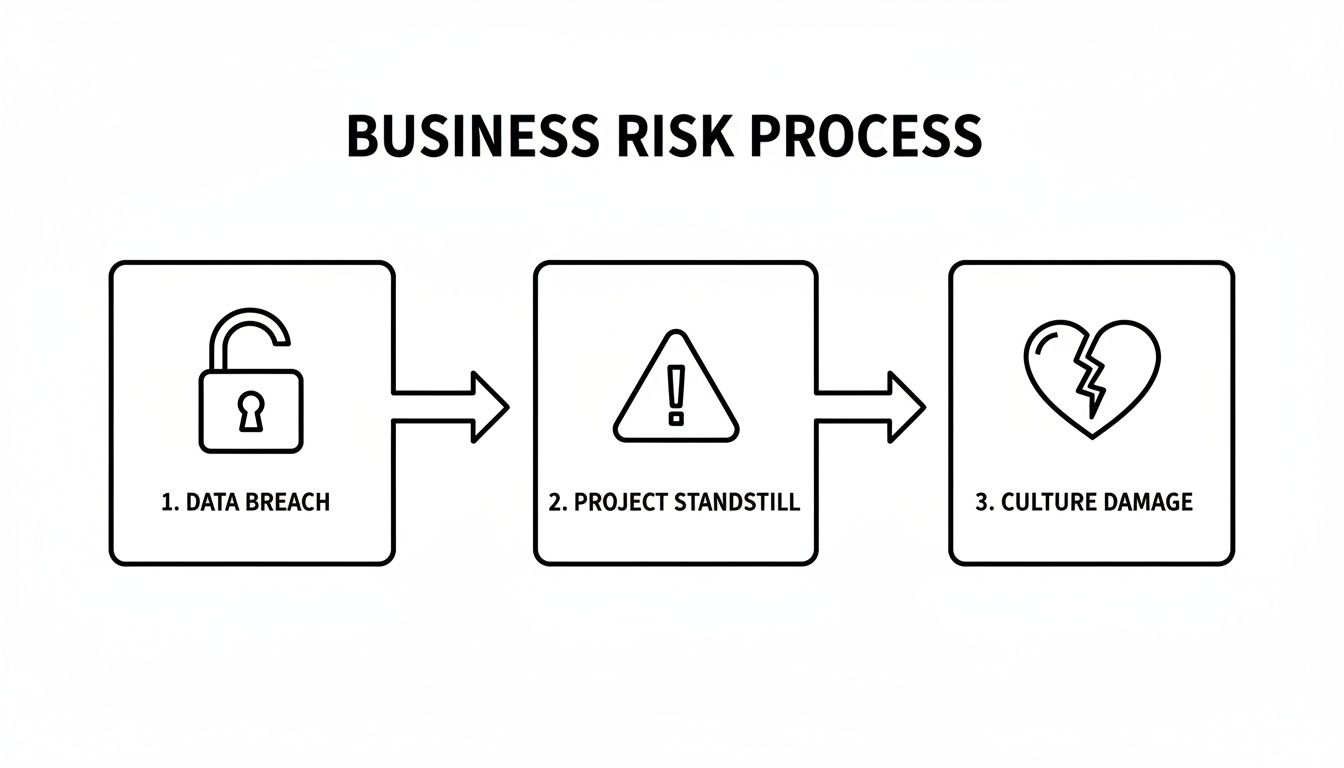
As you can see, what might start as a simple forgotten password can quickly halt projects and erode the trust you've built with your team.
For startups and BPOs in shared or leased offices, the timeline has an extra layer: coordinating with the building management or your seat leasing provider. This is to ensure security badges and access cards are deactivated on the employee's final day—a surprisingly easy step to forget. If you're unsure about the process, it's always smart to reach out to your provider and get clarity on their specific protocols.
Key Takeaway: The objective isn't just to manage an employee's departure. It's about controlling the narrative, demonstrating strong leadership, and reassuring the rest of the team that the business is stable and prepared for the transition.
The first 24-48 hours after a resignation are the most crucial. Having a clear checklist for managers and HR can transform a potentially chaotic event into a well-managed process. Here’s a breakdown of the immediate priorities.
Immediate Actions Following an Employee Resignation
| Action Item | Responsibility | Purpose and Key Considerations |
|---|---|---|
| Acknowledge and Formalize | Manager | Receive the news professionally. Immediately request the resignation in writing (email) to create an official record for HR. |
| Notify Key Stakeholders | Manager / HR | Discreetly inform HR, IT, and relevant department heads. Avoid broad announcements until a communication plan is ready. |
| Draft a Handover Plan | Manager & Departing Employee | Begin outlining a plan for knowledge transfer, project handoffs, and client introductions. Don't wait until the last minute. |
| Prepare Team Communication | Manager & HR | Draft a clear, positive message to share with the team at the right time. Focus on continuity and appreciation for the employee's work. |
| Schedule the Exit Interview | HR | Book a time for the exit interview during the employee's final week. This ensures feedback is collected while their experience is still fresh. |
By tackling these actions right away, you establish control from day one. You shift from being reactive to proactive, protecting your assets, ensuring business continuity, and treating your departing team member with the respect that reflects well on your entire organization. This is the bedrock of a secure and successful offboarding.
Securing Your Digital and Physical Assets
When an employee leaves, especially in a shared or leased workspace, you're not just saying goodbye—you're managing a critical security handoff. Your employee exit procedure needs to be an airtight process for locking down digital accounts and recovering physical property. One missed step can leave sensitive data exposed and create security headaches that ripple far beyond your team.
The clock starts ticking the moment an employee gives their notice. This isn’t a task for their last day; your IT team or a designated manager needs to kick off the offboarding protocol immediately. The first step is to map out every access point and piece of gear that needs to be recovered or deactivated.

Don't underestimate the risk here. Lingering digital access is one of the most common—and costly—offboarding failures. It might sound like a rare oversight, but a recent study revealed that a staggering 20% of companies suffered a data breach caused by a former employee who still had access to internal systems.
The Non-Negotiable IT Offboarding Checklist
Your best defense is a comprehensive IT offboarding checklist. Think of it as a living document, not a static file you check once a year. Every time you bring on a new software or platform, it needs to be added to this list. This is the only way to ensure nothing gets missed.
I've learned it’s best to organize the checklist by timing and priority. For example, you might revoke access to high-level financial reports or client databases a few days before they depart, but keep their email active until their final hour to ensure a smooth handover.
Your IT shutdown list absolutely must cover:
- Core Business Systems: This is the big stuff. Think company email (Google Workspace, Microsoft 365), cloud storage (Dropbox, OneDrive), your CRM (Salesforce), and project management tools (Asana).
- Communication Platforms: Deactivate their accounts on internal chat tools like Slack or Microsoft Teams. It’s not enough to just deactivate the user; make sure they're removed from all relevant channels, especially private ones with sensitive info.
- Third-Party Software: Make a list of every single SaaS platform they had a login for, from accounting software to social media schedulers. Every. Single. One.
- Shared Passwords: If your team uses shared credentials for anything, change them immediately. This is a simple but critical step that’s so easy to forget in the rush.
When you’re decommissioning devices, you also have to think about the data left behind. Wiping a hard drive isn't always enough. It's worth getting familiar with different Secure Data Destruction Methods to ensure no residual data can ever be recovered.
Managing Physical Assets in Shared Workspaces
Getting company property back is just as vital as securing digital access. This is about more than just the laptop. For businesses in a BPO or coworking space, you’ll also need to loop in the workspace provider to tie up all the loose ends.
Your physical asset recovery plan should be just as thorough:
- Company-Issued Equipment: On their last day, collect all laptops, mobile phones, monitors, and other hardware. Check everything for damage and make sure you get all the accessories back, like chargers and cables.
- Access Cards and Keys: This is a huge one, particularly in multi-tenant buildings. Coordinate with your seat leasing provider to deactivate the employee’s access badge or key fob at the exact end of their final shift. This prevents any chance of unauthorized re-entry.
- Company Credit Cards: Any corporate cards need to be returned directly to HR or finance and cancelled on the spot. No exceptions.
- Uniforms and Branded Gear: If you provide branded clothing or other items, stick to your policy for their return.
Expert Tip: I always use a formal Asset Return Form that the departing employee signs. It lists every item, its condition, and the return date. This creates a simple paper trail that protects everyone involved and prevents any "he said, she said" arguments later.
Remember, data privacy is a huge part of this process. The way you handle their data during the offboarding process is a direct reflection of your company's integrity. As we explain in our guide, a well-defined privacy policy protects your business by setting clear expectations for data management during these transitions.
By being methodical, you turn a potentially chaotic last day into a controlled and professional wrap-up. It's the only way to be sure that when an employee leaves, your sensitive access and company property don't leave with them.
Ensuring Seamless Knowledge Transfer
When an employee walks out the door, their know-how shouldn't go with them. A solid employee exit procedure absolutely must include a structured knowledge transfer plan. This isn't just about avoiding hiccups; it's about protecting the core operational intelligence that keeps your business running.
This process is so much more than just asking for a few important files. It’s a systematic effort to download the departing employee’s expertise into a format the company can keep and use. For this to work, it’s critical to start understanding the importance of knowledge transfer the moment you get their resignation.

Here's the thing most businesses miss: departing employees are usually happy to help—if you just ask. One study I came across highlighted this perfectly. It found that 93% of departing employees believe their feedback is valuable and could help their old company, but very few businesses have a system to capture it. This gap shows a real weakness in how most companies handle offboarding.
Creating the Handover Document
A detailed handover document is your single most important tool here. This isn't a quick email; it's the instruction manual their successor will use to get up to speed without constant hand-holding. Your job is to give the departing employee a clear template so they can fill it out thoroughly.
A great handover document should cover every part of their role. Here’s what it needs to include:
- Daily, Weekly, and Monthly Tasks: A simple list of recurring duties, including deadlines and what a "good" outcome looks like.
- Key Contacts: Who do they talk to, both inside and outside the company? Add a note about the relationship, like "prefers quick phone calls" or "always replies to email within a day."
- Project Statuses: A snapshot of all active projects. What's done, what's next, and are there any potential problems?
- File Locations: Don't just say "it's on the shared drive." Provide direct links to the exact folders and key documents.
- Login and Password Information: Have them list credentials in a secure document. It's crucial that IT changes these passwords immediately after their last day.
Providing a template makes this less of a chore for the departing employee and ensures you get the exact information you need to keep things running smoothly.
Expert Tip: Don't wait until their last week to kick this off. As soon as they give notice, ask them to start documenting. Spending just 30 minutes a day on the handover document prevents that last-minute scramble and yields much better results.
Facilitating Productive Handover Meetings
The document is the script, but the real magic happens in the handover meeting. This is where all the unwritten rules and "tribal knowledge" get passed on. You'll want to schedule at least one session between the departing employee and their manager or, ideally, their replacement.
In these meetings, the goal is to have a conversation, not just read from a document. Use this time to ask questions and understand the why behind the what.
A Simple Agenda for Your Handover Meeting:
- Walk Through the Core Tasks: Go over their main responsibilities. Ask questions like, "Why is it done this way?" You might uncover a shortcut or dependency you never knew about.
- Talk About People: Go through the contact list. What are the unwritten rules for communicating with a particular client or partner?
- Get a Live Demo: Ask them to share their screen and walk you through a complex process. Seeing it done live is infinitely more valuable than reading about it.
- Open the Floor: Leave plenty of time for questions. Seriously, no question is too small or too obvious.
Getting a departing employee to engage fully comes down to respect. Frame this process not as one last task, but as their chance to leave a positive, lasting impact. When you manage knowledge transfer with care, you turn a potential brain drain into a permanent company asset.
Conducting Meaningful Exit Interviews
Let's be honest, the exit interview can feel like a simple box-checking exercise at the end of a long offboarding checklist. But I've learned from experience that it’s actually one of the most powerful tools a small business has for getting brutally honest feedback. Viewing this final conversation as a strategic debrief, not just a formality, is the key to unlocking insights that can genuinely reduce your turnover.
For startups or BPOs, the first question is always who should handle it. It’s tempting to let the direct manager do it, but that's often a mistake. If an employee is leaving because of their manager, you can't expect them to be candid. The best approach is to use a neutral person—someone from HR, an unbiased senior leader, or even a trusted partner from your shared workspace management team. The goal is to create a safe space for real talk.
Creating a Space for Candid Feedback
Timing is everything. One of the most common missteps is squeezing the interview into the employee's last day. They're usually distracted with goodbyes and last-minute handovers, and you'll get rushed, surface-level answers. I've found it's much more effective to schedule it a day or two before their last day, which gives them a chance to reflect.
A great exit interview starts by setting the right tone. You need to make it clear that their feedback is a gift, not a grievance session. I always start by reassuring them that the conversation is confidential and will be used constructively to make things better for the colleagues they're leaving behind.
The goal of an exit interview isn't to change the employee's mind or get defensive about company policies. It's to listen, learn, and spot patterns that can help you build a stronger, more supportive workplace.
The data backs this up completely. Startling research from Paycor shows how important these talks are; 42% of employees who quit believe their departure could have been prevented. Even more telling, 45% said they hadn't had a single meaningful conversation with their manager about their job satisfaction in the three months before they left. That's a massive communication breakdown and a huge missed opportunity.
Asking the Right Questions
Forget generic, yes-or-no questions; they're a waste of everyone's time. The real value comes from asking open-ended questions that encourage people to tell a story. You're trying to uncover the real reasons behind their decision and find trends related to management, pay, culture, or daily work life.
So, instead of a leading question like, "You liked the team culture, didn't you?" try prompts that invite detail and specific examples. Here are a few that have always worked well for me:
- What was the moment or situation that made you start looking for another job?
- Think about your time here. Can you tell me about a time you felt really energized and motivated? What about a time you felt the opposite?
- Did you feel you had the right tools and support to really succeed here?
- If you were to describe your manager's style, what would you say?
- If you had a magic wand, what’s one thing you would change to make this a better place to work?
- What does your new company offer that was missing for you here?
Your job in this meeting is to listen more than you talk. Take notes, but don't let your head stay buried in a notepad—maintain eye contact and show you're actually hearing them. When you start noticing a pattern—maybe the third person from the same department mentions a lack of clear growth paths—you’ve just found a critical piece of business intelligence. This is how a simple goodbye turns into your best retention strategy.
Common Questions About Employee Exit Procedures
When an employee resigns, it’s natural for a bit of panic to set in, especially for growing businesses that don't have a huge HR team. Having a solid plan turns that potential chaos into a controlled, professional process. Let's walk through some of the most common questions I hear from startups and BPOs navigating employee departures.
Getting this right is a key part of your bigger operational strategy. How you manage transitions, including physical space, is just as important. In fact, we touch on some of these related ideas in our guide to optimizing office space for business growth, which is a great companion read.
What Is the Ideal Timeline for an Employee Exit?
In my experience, trying to cram an entire offboarding process into the employee's last day is a disaster waiting to happen. You’ll miss crucial steps, leave security holes open, and create a stressful experience for everyone. A proper exit should unfold over the entire notice period, which is usually two to four weeks.
Here’s a practical timeline that actually works:
- Immediately After Resignation (Day 1-2): Once you have the resignation in writing, the manager needs to loop in HR and IT right away. This is the starting gun. It kicks off the formal checklist and, most importantly, the creation of a handover plan tailored to that person's role.
- The First Week: This week is all about knowledge transfer. The departing employee should start documenting their daily tasks, the status of their projects, and a list of key contacts. Don't wait until the end—start now.
- The Final Week: Now, you're focused on finalization. The handover documents should be nearly complete, and any last-minute training sessions with their replacement or team members should happen here. This is also when IT can start revoking access to less critical systems, and HR should schedule the exit interview.
- The Last Day: This is purely for the final handoff. You'll collect all company property (laptop, phone, keys), and IT will terminate all remaining system access the moment their workday ends. HR ensures their final pay is processed correctly and provides all the necessary info on benefits continuation.
Who Is Responsible for Managing the Exit Process?
A smooth offboarding is a coordinated effort, not a one-person show. If you don't have clear roles, important tasks will inevitably be forgotten. Think of it as a three-legged stool—if one leg is wobbly, the whole thing falls over.
Here’s how the responsibilities usually break down:
- The Direct Manager: This person owns the knowledge transfer. Their job is to work side-by-side with the departing employee to make sure projects are safely handed off, client relationships are seamlessly transitioned, and nothing critical is left undocumented.
- Human Resources (HR): HR handles all the paperwork and legal compliance. They ensure the final paycheck is calculated correctly according to state laws, conduct the exit interview to gather honest feedback, and walk the employee through their post-employment benefits like COBRA.
- The IT Department: Your IT team is the gatekeeper of your company’s security. They are responsible for meticulously following the IT offboarding checklist—revoking access to every single system, wiping devices, and physically collecting all company-issued hardware.
In a shared or leased workspace, you have a fourth key player: the facility manager. You have to coordinate with them to deactivate building access cards and shut down any network ports assigned to that specific desk. Don't forget this step!
How Can We Maintain a Positive Relationship?
How you treat people on their way out says everything about your company culture. It sends a powerful message to your remaining team and directly impacts your employer brand. A bad exit experience can haunt you for years.
The goal is to be respectful, transparent, and professional from start to finish. Let the employee know what to expect at every stage of the employee exit procedure. Take a moment to genuinely thank them for their contributions and wish them well. It’s a small gesture that leaves a huge, positive impression.
Done right, this can turn a former employee into a brand advocate. They might refer great candidates to you down the line or even return as a "boomerang" employee one day with a whole new set of valuable skills.
What Are the Biggest Offboarding Security Risks?
By far, the biggest security risks are lingering data access and potential intellectual property theft. A former employee who can still log into their old email, your CRM, or your cloud storage is a massive liability.
Your best defense is a rigid, non-negotiable IT offboarding checklist. There can be no gray areas.
- On the employee’s last day, at a specific time, all access must be terminated. This includes email, internal servers, project management tools like Asana or Jira, and any client-facing portals.
- If you have a Bring Your Own Device (BYOD) policy, you should be using a Mobile Device Management (MDM) tool to remotely wipe all company data from their personal phones and laptops.
- As a final precaution, make it a standard practice to change any shared passwords the departing employee had access to. A strict protocol is the only thing standing between your sensitive data and a potential breach.
Looking for an office solution that grows with you and simplifies operational management? Seat Leasing BPO offers flexible, cost-effective workspace solutions that handle all the backend support, including IT and security, so you can focus on your business. Discover how our model can save you up to 80% on overhead at https://seatleasingbpo.com.