The business process outsourcing landscape has evolved dramatically over the past decade, with information technology services emerging as a critical component of operational strategy. Organizations now recognize that bpo it services extend far beyond basic help desk support, encompassing comprehensive infrastructure management, cloud operations, cybersecurity, and strategic technology consulting. As companies face mounting pressure to innovate while controlling costs, the strategic deployment of IT outsourcing has become essential for maintaining competitive advantage in an increasingly digital marketplace.
Understanding the Modern BPO IT Services Ecosystem
Business process outsourcing for IT functions represents a fundamental shift in how organizations approach technology management. Rather than maintaining large internal IT departments, companies now leverage specialized providers who offer expertise, scalability, and cost efficiency that would be difficult to replicate in-house.
Core Components of BPO IT Services
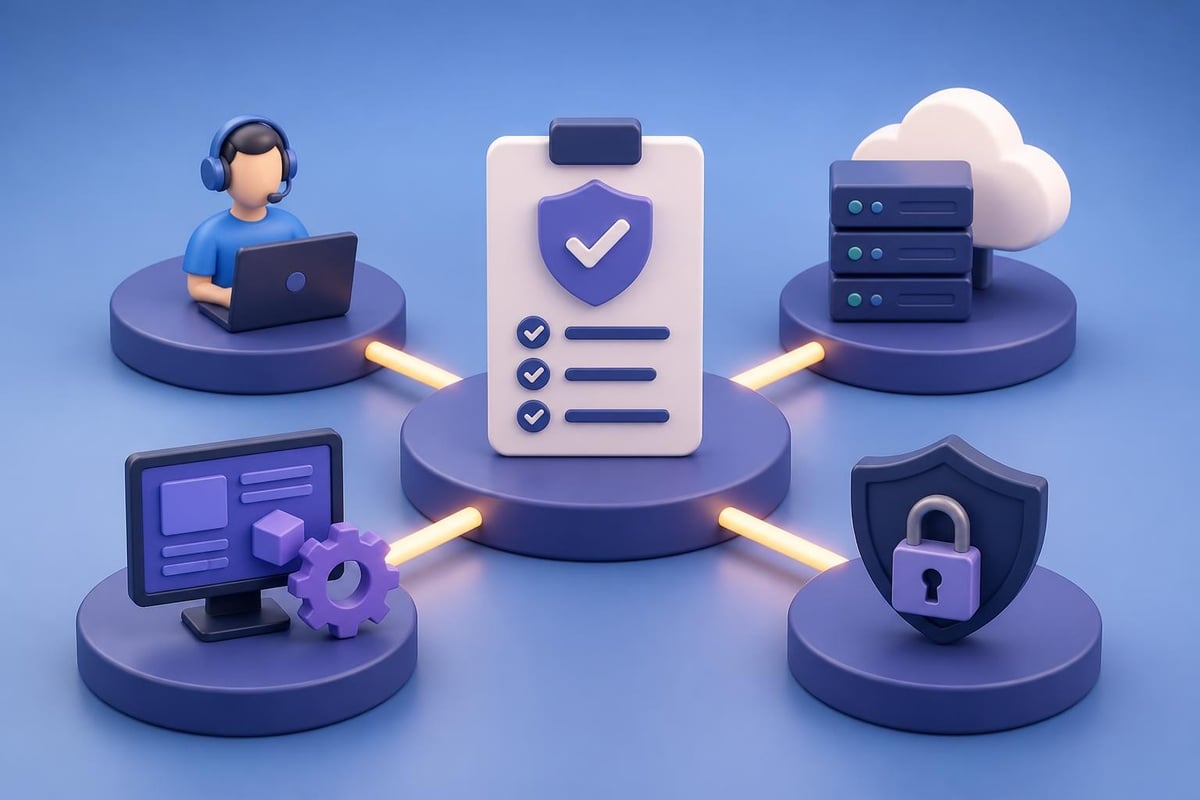
The scope of bpo it services has expanded significantly to address the complex technology needs of modern enterprises. These services typically encompass several critical areas that work together to create a comprehensive IT management solution.
Infrastructure Management forms the foundation, including:
- Server administration and maintenance
- Network monitoring and optimization
- Storage management and backup solutions
- Hardware procurement and lifecycle management
Application Support ensures business-critical software operates smoothly through development, maintenance, and troubleshooting activities. Cloud services management has become increasingly central, with providers offering migration assistance, multi-cloud orchestration, and ongoing optimization of cloud resources.
Security operations represent another critical dimension. As cyber threats grow more sophisticated, outsourced IT security teams provide 24/7 monitoring, threat detection, incident response, and compliance management that many organizations struggle to maintain internally.
The Technology Stack Behind Effective IT Outsourcing
Modern bpo it services rely on sophisticated technology platforms that enable remote management, automation, and proactive issue resolution. Service providers deploy advanced monitoring tools that track system performance, predict failures before they occur, and automatically remediate common issues without human intervention.
| Technology Category | Primary Function | Business Impact |
|---|---|---|
| Remote Monitoring | 24/7 system surveillance | Reduced downtime |
| Service Desk Software | Ticket management & resolution | Faster response times |
| Automation Platforms | Routine task execution | Lower operational costs |
| Analytics Tools | Performance trending | Data-driven decisions |
| Security Information & Event Management | Threat detection | Enhanced protection |
The integration of artificial intelligence into these platforms has fundamentally changed service delivery models. AI is redefining BPO trends by shifting focus from labor arbitrage to intelligence-based outcomes, requiring new skills in prompt engineering, governance, and performance optimization.
Strategic Advantages Driving BPO IT Services Adoption
Organizations pursuing IT outsourcing strategies do so for reasons that extend well beyond simple cost reduction. While financial efficiency remains important, the value proposition has evolved to encompass strategic capabilities that enhance overall business performance.
Cost Optimization and Predictable Budgeting
Financial considerations remain a primary driver for adopting bpo it services, but the nature of these benefits has matured. Rather than simply reducing headcount, companies achieve cost efficiency through:
- Elimination of capital expenditures for hardware and infrastructure
- Conversion to predictable operational expenses through fixed monthly fees
- Access to enterprise-grade tools without individual licensing costs
- Reduced training and recruitment expenses for specialized IT roles
- Economies of scale as providers spread costs across multiple clients
The IT & technology services industry has increasingly adopted recurring revenue models that provide clients with budget predictability while enabling providers to invest in continuous service improvements.
Access to Specialized Expertise and Innovation
Technology evolves at a pace that challenges even the most well-resourced IT departments. BPO IT services provide access to specialists across emerging technologies, security protocols, and industry best practices without the overhead of maintaining these skills internally.
This expertise advantage becomes particularly valuable when:
- Implementing new technologies like containerization or serverless computing
- Responding to sophisticated cybersecurity threats
- Maintaining compliance with evolving regulatory requirements
- Optimizing cloud spending across multiple platforms
- Integrating legacy systems with modern applications
For companies operating in specialized facilities such as a call center for rent, having immediate access to enterprise-grade IT infrastructure managed by experienced professionals enables rapid deployment and operational excellence from day one.

Enhanced Security and Compliance Posture
Cybersecurity has emerged as a critical concern for organizations of all sizes, with data breaches carrying severe financial and reputational consequences. Dedicated security teams within bpo it services bring depth of experience managing threats across diverse client environments.
Key security benefits include:
- Round-the-clock monitoring by certified security professionals
- Access to threat intelligence from across provider's client base
- Rapid patch management and vulnerability remediation
- Compliance expertise for industry-specific regulations
- Incident response capabilities that activate immediately
The distributed nature of modern work environments has made security even more complex. IT outsourcing providers maintain current expertise in securing remote access, protecting cloud data, and managing identity across multiple platforms.
Service Delivery Models and Contract Structures
Organizations can structure their IT outsourcing relationships in various ways, each offering different levels of control, flexibility, and strategic alignment. Understanding these models helps companies select arrangements that best match their operational requirements and risk tolerance.
Comprehensive Managed Services vs. Co-Managed IT
Fully Managed Services transfer complete responsibility for specific IT functions to the provider. This model works well for organizations lacking internal IT expertise or those seeking to focus internal resources on core business activities. The provider assumes accountability for outcomes, not just activities.
Co-Managed IT creates a partnership where internal teams handle strategic planning and specialized projects while the BPO provider manages routine operations, after-hours support, and supplemental expertise. This hybrid approach preserves institutional knowledge while gaining operational efficiency.
Project-Based Engagements address specific initiatives like cloud migrations, system implementations, or infrastructure upgrades without ongoing operational responsibility. These time-bound arrangements suit organizations with strong internal capabilities requiring temporary reinforcement.
| Model Type | Best For | Key Advantage | Primary Consideration |
|---|---|---|---|
| Fully Managed | Limited internal IT | Complete outsourcing | Less direct control |
| Co-Managed | Existing IT team | Balanced responsibility | Coordination required |
| Project-Based | Specific initiatives | Focused expertise | Temporary engagement |
| Staff Augmentation | Skill gaps | Targeted resources | Integration challenges |
Pricing Structures and Performance Metrics
Modern bpo it services employ various pricing models designed to align provider incentives with client outcomes. Understanding these structures helps organizations negotiate arrangements that protect their interests while ensuring provider sustainability.
Fixed monthly fees provide budget predictability and work well for stable environments with consistent service requirements. This approach shifts risk to the provider, who must manage resources efficiently to maintain profitability.
Per-user pricing scales costs directly with headcount, making it attractive for growing organizations. However, this model may not account for varying support requirements across different user types.
Tiered service levels offer different response times, coverage hours, and included services at varying price points. Organizations select tiers matching their operational criticality and budget constraints.
Performance measurement has evolved beyond simple uptime metrics to encompass business-relevant outcomes. The 2026 State of BPO Report highlights how buyers are re-evaluating supplier relationships based on value delivery rather than just cost reduction.
Selecting the Right BPO IT Services Provider
Choosing an IT outsourcing partner represents a strategic decision with long-term implications for technology capabilities, security posture, and operational efficiency. A structured evaluation process helps identify providers whose capabilities, culture, and commitment align with organizational requirements.
Essential Evaluation Criteria
Technical Capabilities and Certifications provide foundational confidence in provider competence. Look for industry-recognized credentials, partnerships with major technology vendors, and demonstrated expertise in your specific technology environment.
- Assess service scope completeness to ensure the provider can address all critical IT functions
- Evaluate security certifications including SOC 2, ISO 27001, and industry-specific compliance
- Review technology partnerships with Microsoft, AWS, Google, Cisco, and other key vendors
- Examine disaster recovery capabilities and business continuity planning
- Investigate innovation practices and how the provider stays current with emerging technologies
Cultural Alignment and Communication often determine whether the relationship thrives or struggles. Technical competence means little if the provider cannot effectively collaborate with your team and understand your business context.
Geographic considerations matter for bpo it services, particularly regarding time zone coverage, language capabilities, and data sovereignty requirements. Providers with strategically located operations can offer round-the-clock coverage while maintaining cost efficiency.
Due Diligence and Risk Assessment
Thorough vetting protects against partnership failures that can disrupt operations and compromise security. Beyond reviewing marketing materials and sales presentations, dig into operational realities through reference checks and detailed questioning.
Critical due diligence areas include:
- Financial stability and ownership structure
- Employee retention rates and training programs
- Client retention statistics and reasons for departures
- Incident history and how problems were resolved
- Subcontracting practices and supply chain dependencies
- Insurance coverage for errors, omissions, and cyber events
The contract negotiation phase establishes the operational framework for the relationship. Pay particular attention to service level agreements, escalation procedures, data ownership provisions, and exit terms that enable smooth transitions if the relationship ends.
Emerging Trends Reshaping BPO IT Services
The technology landscape continues evolving at an accelerating pace, with several transformative trends fundamentally changing how bpo it services are delivered and consumed. Organizations that understand these shifts can position themselves to capture emerging opportunities while avoiding obsolete approaches.
AI-Driven Service Delivery and Automation
Artificial intelligence has moved from experimental technology to operational reality within IT outsourcing. Providers now deploy AI for predictive maintenance, automated incident resolution, and intelligent service routing that dramatically improves response times and accuracy.
AI’s impact on BPO extends beyond efficiency gains to fundamental value creation through business insights, enhanced customer experience, and sustainable competitive advantages that simple cost reduction cannot deliver.

AI applications in IT outsourcing include:
- Chatbots and virtual agents handling tier-1 support requests
- Machine learning models predicting system failures before they occur
- Natural language processing for improved ticket categorization
- Anomaly detection identifying security threats and performance issues
- Robotic process automation executing routine administrative tasks
Cloud-Native Operations and Multi-Cloud Management
As organizations adopt cloud-first strategies, bpo it services have evolved to provide sophisticated cloud operations management. This extends beyond simple infrastructure hosting to encompass cost optimization, security hardening, and multi-cloud orchestration across AWS, Azure, Google Cloud, and specialized platforms.
Providers now offer cloud center of excellence services that help clients navigate architectural decisions, implement DevOps practices, and optimize spending across complex cloud estates. This strategic guidance complements operational management to maximize cloud investment returns.
Security-First Service Models
The escalating threat landscape has elevated cybersecurity from a technical concern to a business imperative. Modern IT outsourcing providers embed security throughout service delivery rather than treating it as a separate function.
Zero-trust architectures, continuous security validation, and security-by-design principles now characterize leading bpo it services. Providers maintain dedicated security operations centers staffed by certified professionals who monitor client environments for threats, investigate anomalies, and coordinate incident response.
Implementation Best Practices for IT Outsourcing Success
Successfully transitioning to outsourced IT services requires careful planning, clear communication, and disciplined execution. Organizations that approach implementation strategically achieve faster value realization and avoid common pitfalls that derail less disciplined transitions.
Transition Planning and Knowledge Transfer
Effective transitions begin with comprehensive documentation of existing systems, processes, and institutional knowledge. This baseline enables the provider to assume responsibilities without disrupting operations or losing critical information.
Successful transition programs incorporate:
- Detailed asset inventories covering hardware, software, and licenses
- Process documentation explaining workflows and dependencies
- Access credential catalogs with appropriate security controls
- Contact directories for vendors, contractors, and key stakeholders
- Historical incident data revealing common issues and resolutions
Phased implementation reduces risk by validating provider capabilities on non-critical functions before transferring mission-critical operations. This approach builds confidence, identifies process gaps, and allows refinement before full deployment.
Governance Structures and Ongoing Management
The relationship between client and provider requires active management to ensure alignment, address emerging issues, and drive continuous improvement. Establishing clear governance structures prevents misunderstandings and creates mechanisms for collaboration.
Regular service reviews examine performance against agreed metrics, discuss upcoming initiatives, and identify optimization opportunities. These sessions should involve both technical staff and business stakeholders to maintain strategic alignment.
Escalation procedures define how urgent issues get addressed when normal channels prove insufficient. Clear authority levels, response time commitments, and communication protocols prevent minor problems from becoming major disruptions.
Measuring Value and Driving Continuous Improvement
Organizations that treat outsourcing as a static arrangement miss opportunities for ongoing value creation. Leading companies establish continuous improvement programs that challenge providers to deliver increasing value over time.
Key performance indicators should track:
| Metric Category | Example Measures | Strategic Value |
|---|---|---|
| Service Quality | Ticket resolution time, first-call resolution rate | User satisfaction |
| System Performance | Uptime percentage, response times | Business continuity |
| Security Posture | Vulnerabilities remediated, security incidents | Risk reduction |
| Cost Efficiency | Cost per user, infrastructure spending trends | Financial optimization |
| Innovation Impact | New capabilities deployed, process improvements | Competitive advantage |
Regular benchmarking against industry standards and alternative providers ensures the relationship remains competitive. This external perspective prevents complacency and provides objective performance context.
The strategic deployment of BPO IT services has become essential for organizations seeking to balance operational efficiency with technology innovation in an increasingly complex digital landscape. By understanding service models, evaluating providers carefully, and implementing strong governance, companies can leverage IT outsourcing to achieve sustainable competitive advantages. Seat Leasing BPO provides the secure, scalable infrastructure foundation that enables immediate productivity for outsourced IT operations, offering enterprise-grade equipment, high-speed connectivity, and a professional environment purpose-built for technology service excellence. Contact us to discover how our ready-to-use workspace solutions can accelerate your IT outsourcing success.