Business process outsourcing has evolved from a cost-cutting measure into a strategic necessity across multiple sectors. Companies worldwide recognize that partnering with specialized service providers enables them to focus on core competencies while maintaining operational excellence. Understanding which industries drive BPO growth and how they leverage outsourcing reveals critical insights for businesses planning their 2026 operational strategies. The landscape of bpo industries continues to expand, with traditional sectors adopting new technologies while emerging markets create entirely new outsourcing opportunities.
Financial Services Leading the BPO Revolution
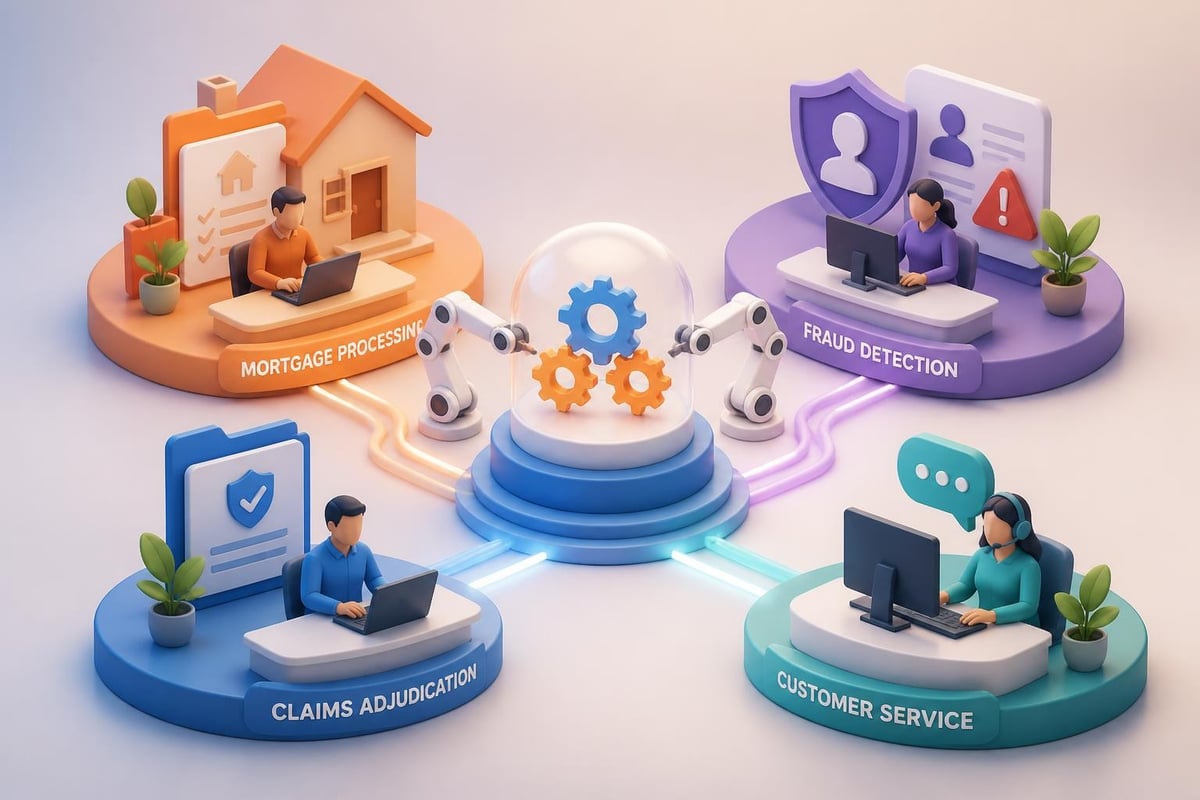
The financial services sector remains one of the largest consumers of BPO services globally. Banks, insurance companies, and investment firms outsource critical functions including customer service, claims processing, fraud detection, and back-office operations. This sector's heavy regulatory requirements and need for 24/7 customer support make outsourcing particularly attractive.
Key financial BPO services include:
- Mortgage processing and loan servicing
- Credit card operations and fraud monitoring
- Insurance claims adjudication
- Payment processing and reconciliation
- Compliance and regulatory reporting
Financial institutions increasingly seek business process outsourcing services that combine human expertise with artificial intelligence capabilities. The integration of machine learning algorithms into routine tasks allows human agents to focus on complex problem-solving and relationship management. This hybrid approach has become standard practice among leading financial services firms.
Risk Management and Compliance Outsourcing
Regulatory complexity drives financial institutions toward specialized BPO partners who maintain expertise across multiple jurisdictions. These providers invest heavily in compliance infrastructure, ensuring clients meet evolving regulatory standards without maintaining large in-house teams. The cost savings prove substantial, particularly for mid-sized institutions competing against larger rivals.
Healthcare and Medical BPO Industries
Healthcare organizations face mounting pressure to reduce costs while improving patient outcomes. Medical billing, coding, transcription, and claims processing represent significant operational expenses that many providers successfully outsource. The healthcare BPO market has experienced remarkable growth as telemedicine and digital health records create new service opportunities.
| Healthcare BPO Service | Primary Benefit | Growth Driver |
|---|---|---|
| Medical Billing | Revenue Cycle Efficiency | Complex Insurance Requirements |
| Clinical Documentation | Accuracy and Compliance | Regulatory Standards |
| Patient Scheduling | Improved Access | 24/7 Availability Needs |
| Claims Processing | Faster Reimbursement | Volume Management |
Healthcare providers recognize that outsourcing non-clinical functions allows medical professionals to dedicate more time to patient care. This strategic reallocation of resources directly impacts patient satisfaction scores and clinical outcomes. The transformation of BPO services through AI integration has particularly benefited healthcare organizations managing massive data volumes.
Pharmaceutical and Biotech Outsourcing
Drug manufacturers and research organizations outsource clinical trial management, pharmacovigilance, and regulatory affairs. These specialized services require deep domain expertise and global coordination capabilities. BPO providers serving pharmaceutical companies typically employ scientists and medical professionals who understand complex regulatory environments across multiple markets.
Telecommunications Industry BPO Adoption
Telecommunications companies pioneered large-scale BPO adoption, outsourcing customer service, technical support, and network management functions. The industry's competitive dynamics and thin profit margins make operational efficiency critical. Telecom BPO operations often handle millions of customer interactions monthly across voice, chat, email, and social media channels.
Modern telecom BPO solutions emphasize omnichannel support and first-call resolution. Providers invest in sophisticated workforce management systems that optimize agent scheduling and skill-based routing. These technologies ensure customers reach the right specialist quickly, improving satisfaction while reducing handle times.
Telecommunications BPO functions:
- Customer acquisition and retention
- Technical troubleshooting and support
- Billing inquiry resolution
- Network monitoring and maintenance
- Sales and upselling campaigns
The shift toward 5G networks and Internet of Things deployments creates new support requirements that telecommunications providers address through specialized BPO partnerships. These partnerships provide flexible capacity to handle fluctuating demand without permanent headcount increases.

E-Commerce and Retail BPO Growth
Online retailers and traditional stores with digital channels rely heavily on BPO services for customer support, order processing, and returns management. The explosive growth of e-commerce since 2020 has created unprecedented demand for scalable customer service solutions. Peak shopping seasons require rapid workforce scaling that internal operations cannot efficiently provide.
E-commerce BPO services extend beyond basic customer service to include product data management, marketplace optimization, and content moderation. Retailers selling across multiple platforms need specialized support managing inventory, pricing, and customer communications across diverse ecosystems.
Logistics and Supply Chain Support
The complexity of modern supply chains drives retailers toward outsourcing logistics coordination, shipment tracking, and exception management. BPO providers offer real-time visibility into global supply chains, enabling proactive problem resolution. This capability proves particularly valuable when disruptions threaten delivery commitments.
Technology and Software Industry Outsourcing
Technology companies outsource technical support, software testing, and product documentation to specialized BPO providers. These services require deep technical knowledge and continuous training as products evolve. Many software firms maintain call center for rent arrangements that provide dedicated teams familiar with specific products and customer bases.
The software-as-a-service model creates ongoing support requirements that BPO partnerships efficiently address. Customers expect 24/7 availability and quick resolution times that global BPO networks can deliver. Technology providers benefit from accessing multilingual support capabilities without establishing offices in every market.
| Technology BPO Area | Typical Scope | Strategic Value |
|---|---|---|
| Level 1 Tech Support | Basic Troubleshooting | Cost Efficiency |
| Software QA Testing | Functional and Regression Testing | Quality Assurance |
| Documentation | User Guides and Knowledge Bases | Customer Enablement |
| DevOps Support | Monitoring and Incident Response | Operational Stability |
Manufacturing and Industrial BPO Services
Manufacturers outsource procurement, supply chain management, and quality control documentation to focus resources on production and innovation. The global nature of modern manufacturing makes BPO partnerships essential for coordinating suppliers, tracking shipments, and managing regulatory compliance across borders.
Industrial companies leverage BPO services for equipment maintenance scheduling, spare parts management, and technical documentation. These functions require specialized knowledge but don't represent core competencies for most manufacturers. Outsourcing allows access to best practices and experienced personnel without long-term employment commitments.
Engineering and Design Services
Product development cycles increasingly incorporate outsourced engineering services for computer-aided design, simulation, and technical analysis. BPO providers serving manufacturing clients employ engineers who augment internal teams during peak project periods. This flexible capacity helps companies meet aggressive timelines without permanent headcount increases.

Travel and Hospitality Sector Transformation
Hotels, airlines, and travel agencies outsource reservations, customer service, and loyalty program management. The industry's cyclical nature and seasonal demand fluctuations make BPO partnerships particularly attractive. Providers offer scalable capacity that adjusts to booking volumes without the inefficiency of maintaining excess internal staff.
Travel industry BPO applications:
- Reservation booking and modifications
- Customer complaint resolution
- Loyalty program administration
- Concierge and guest services
- Revenue management support
The future of BPO work requires continuous retraining as automation handles routine transactions while human agents manage complex itinerary planning and problem resolution. Travel BPO providers invest heavily in agent training to deliver personalized service that builds brand loyalty.
Energy and Utilities BPO Adoption
Power companies, oil and gas firms, and renewable energy providers outsource meter reading, billing, and customer service operations. Utility BPO services have evolved significantly with smart meter deployment and distributed energy resources creating new data management requirements. Providers process massive transaction volumes while maintaining accuracy and regulatory compliance.
Energy companies face unique challenges managing emergency response coordination and outage communications. BPO partners provide surge capacity during weather events and other disruptions, ensuring customers receive timely updates and service restoration information.
Regulatory Reporting and Compliance
The heavily regulated energy sector relies on BPO providers for environmental compliance reporting, safety documentation, and regulatory filing preparation. These specialized services require understanding complex regulations that vary by jurisdiction. Outsourcing ensures consistent compliance while avoiding the expense of maintaining large internal regulatory teams.
Government and Public Sector Services
Government agencies increasingly adopt BPO models for citizen services, tax processing, and benefits administration. Public sector outsourcing emphasizes data security and regulatory compliance while improving service delivery efficiency. The business process outsourcing sector continues evolving to meet stringent government security and privacy requirements.
Municipal governments outsource parking enforcement, permit processing, and constituent communication management. These partnerships free internal staff to focus on policy development and strategic initiatives while ensuring citizens receive responsive service.
Real Estate and Property Management
Property management companies outsource tenant screening, maintenance coordination, and rent collection. Real estate BPO services handle high-volume administrative tasks that don't require on-site presence. Virtual leasing agents conduct property tours, answer inquiries, and process applications for properties nationwide.
Commercial real estate firms leverage BPO partnerships for lease administration, tenant communications, and facility management coordination. These services ensure consistent processes across large portfolios while reducing overhead costs.
Education and EdTech Outsourcing
Educational institutions and online learning platforms outsource student support, enrollment processing, and course administration. The rapid growth of online education creates demand for 24/7 student assistance that global BPO operations efficiently provide. Providers offer multilingual support enabling educational institutions to serve international student populations.
EdTech companies rely on BPO partners for content moderation, technical support, and user onboarding. These services require cultural sensitivity and educational domain knowledge that specialized providers develop through focused recruitment and training programs.
Media and Entertainment Industry Support
Media companies outsource content moderation, rights management, and audience engagement services. Streaming platforms process millions of content submissions requiring review for policy compliance. BPO providers employ specialized teams trained to identify problematic content while minimizing false positives that frustrate legitimate users.
Entertainment companies leverage outsourced social media management, fan engagement, and ticketing support. These services maintain brand presence and customer relationships without requiring entertainment companies to build large internal support organizations.
Emerging BPO Industries and Future Trends
New bpo industries continue emerging as technology creates novel business models requiring operational support. Cryptocurrency platforms, autonomous vehicle companies, and augmented reality services represent growing outsourcing opportunities. These sectors need specialized support capabilities that dedicated BPO providers can develop and scale efficiently.
The convergence of artificial intelligence with traditional BPO services creates hybrid delivery models combining automation with human expertise. Companies across all industries seek partners who balance technological capability with the human judgment required for complex problem-solving. This evolution ensures bpo industries will remain vital to business operations well into the future.
The diversity of bpo industries demonstrates outsourcing's universal value across sectors seeking operational efficiency and scalability. Companies choosing the right BPO partnerships gain competitive advantages through cost optimization, access to specialized expertise, and flexible capacity management. Whether you're scaling operations in finance, healthcare, technology, or any other sector, Seat Leasing BPO provides the secure infrastructure and ready-to-use workspaces your team needs for immediate productivity. Contact us today to discover how our enterprise-grade facilities in the Philippines can support your business process outsourcing requirements with scalable, cost-efficient solutions designed for operational excellence.