Think of a short term office lease less like a mortgage and more like a high-end Airbnb for your business. You get a fully-equipped, professional space for the exact amount of time you need it, whether that's a few months or a couple of years.
This "pay-as-you-go" approach to workspace is all about agility. It gives businesses the freedom to react to market shifts, team growth, or new projects without being weighed down by a massive, long-term financial commitment.
What a Flexible Lease Means for Modern Businesses
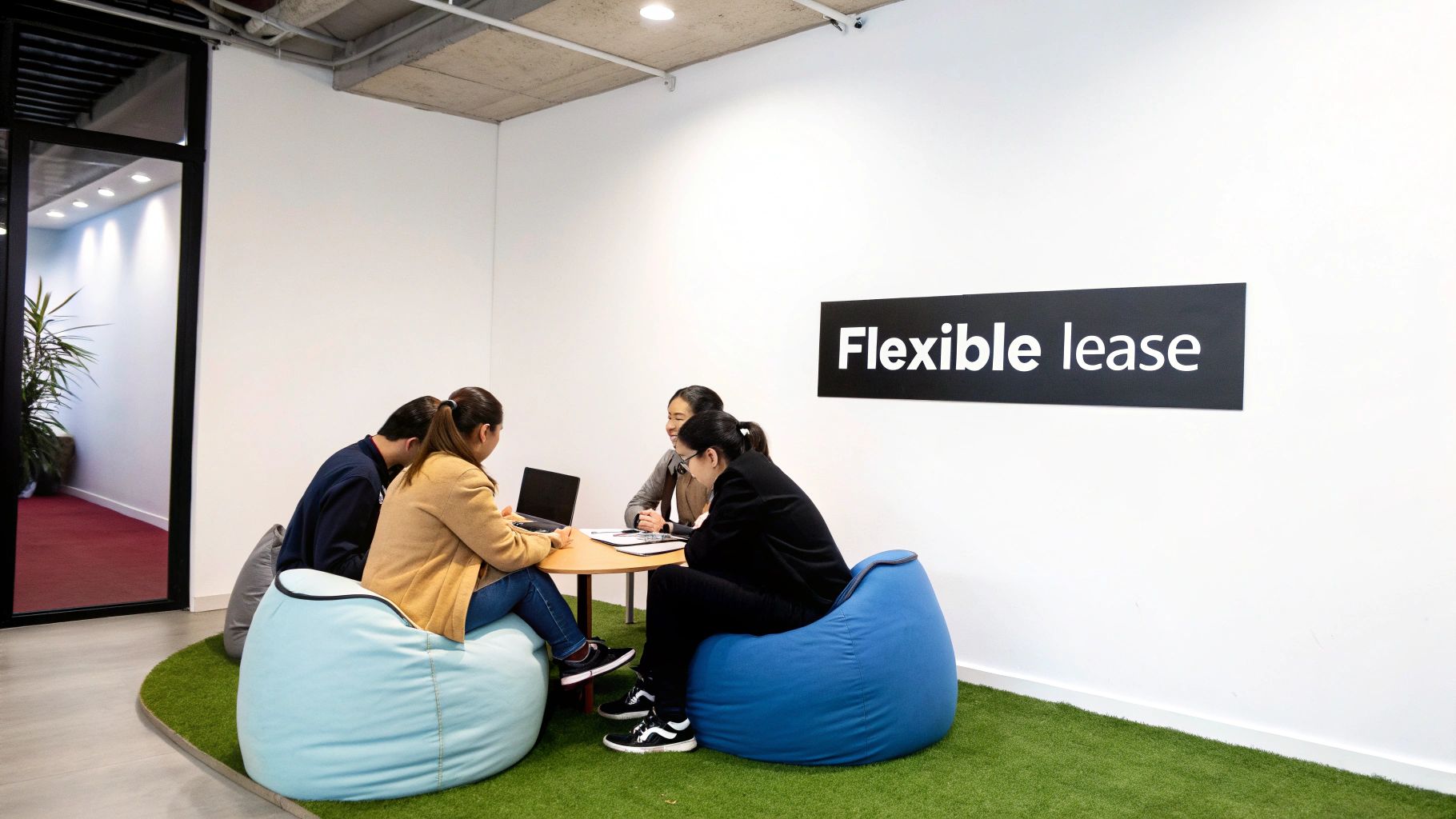
Business plans can change in a heartbeat. Committing to a 10-year office lease today feels like a relic from a different era. The short term office lease is the modern answer to this problem, offering professional, move-in-ready workspaces on flexible terms.
This model is a game-changer for companies at critical growth stages or those simply navigating an uncertain economic climate. It's about having the right space for right now.
Who Benefits Most from Short Term Leases
The beauty of a short-term lease is its broad appeal. It's no longer just a "startup thing." We're seeing a wide range of companies lean into this flexibility for very practical reasons:
- Fast-Growing Startups: When you're hiring aggressively, the last thing you need is an office that's already too small. Short leases let you scale up your space as your team grows.
- Established Enterprises: Large corporations frequently use these spaces for project-specific teams, setting up a satellite office in a new city, or as temporary "swing space" while their main headquarters is being renovated.
- Businesses Testing New Markets: A short-term lease is the perfect low-risk way to plant a flag in a new territory. It allows you to test the waters without the massive capital expense of a long-term commitment.
- Companies with Fluctuating Headcounts: For businesses with seasonal rushes or project-based work, the ability to expand and shrink your office footprint on demand is invaluable.
The global shift toward shorter lease commitments is undeniable. Gone are the days when a decade-long lease was the norm. Today, five-to-seven-year terms are quickly becoming the new standard, a direct result of businesses demanding more flexibility post-pandemic. This trend highlights a fundamental change in how companies think about their physical footprint.
Short Term vs Long Term Leases At a Glance
To really get a feel for what works best for your company, a side-by-side comparison is essential. While both short and long term leases get you an office, they differ significantly in terms of cost, commitment, and overall convenience.
| Feature | Short Term Office Lease | Traditional Long Term Lease |
|---|---|---|
| Typical Duration | 1 month to 3 years | 5 to 10+ years |
| Initial Cost | Low. Usually just a security deposit and the first month's rent. | High. Requires a large security deposit, first/last month's rent, and funds for build-out. |
| Flexibility | High. Easy to scale up or down, or relocate as needed. | Low. Locked into a fixed space and term with heavy penalties for breaking the lease. |
| Amenities | Included. Fully furnished, with Wi-Fi, utilities, and cleaning services typically bundled in. | Not included. Tenant is responsible for furnishing, utilities, internet, and maintenance. |
| Speed to Occupy | Fast. Often ready for move-in within days or weeks. | Slow. Can take months for lease negotiation, legal review, and custom build-out. |
| Customization | Limited. Usually restricted to branding and minor cosmetic changes. | High. Full control over the layout, design, and branding of the space. |
Seeing the core differences laid out like this makes it clear that the "right" choice really depends on your business's immediate needs and long-term vision.
For some businesses, particularly in the BPO sector, even a short-term lease might not be the most efficient model. In those cases, it’s worth exploring even more streamlined alternatives like the services offered at Seat Leasing BPO.
Understanding the Real Costs of a Flexible Office

The sticker price on a short-term office lease is rarely the full story. To get a true handle on what you'll actually spend, you have to dig deeper than that headline number. A solid, realistic budget is your best defense against nasty surprises once the bills start rolling in.
Think of it like buying a plane ticket. The base fare looks great, but then you add on fees for checked bags, seat selection, and Wi-Fi. Before you know it, the total cost is much higher. Your office expenses work the same way—a mix of upfront payments, monthly bills, and a few costs you might not see coming.
Breaking Down the Budget
Let's unpack where your money is really going. A good budget for a flexible office space will account for three distinct types of costs.
-
Upfront Costs: These are the one-time charges you have to pay just to get the keys. The big one is the security deposit, which is usually one or two months' rent. You'll get it back if you leave the space in good shape. You might also see setup or activation fees to get your internet and phone systems running.
-
Recurring Costs: This is your predictable monthly nut. It’s obviously anchored by the monthly base rent, but it also includes utilities like electricity, water, and heating/air conditioning. Don't forget other regular bills for things like internet service, cleaning, and building security.
-
Hidden or Overlooked Costs: These are the variables that can really throw a budget off track. For instance, some landlords charge extra if you need to run the air conditioning after hours. You could also get hit with fees for booking conference rooms, using the printer, or even a final restoration fee to repaint the walls when you leave.
All-Inclusive Models Simplify Everything
This is precisely why all-inclusive pricing models have become so popular. Instead of getting separate bills for rent, Wi-Fi, utilities, and janitorial services, everything gets bundled into a single, predictable monthly payment. It's a game-changer for simplifying your bookkeeping.
An all-inclusive model transforms a variable, unpredictable set of office expenses into a fixed operational cost. This allows for more accurate financial forecasting and eliminates the administrative headache of managing multiple vendor payments.
Imagine a 10-person tech startup that signs an all-inclusive short-term lease. Their one monthly payment covers their private office, high-speed internet, all utilities, daily cleaning, and even access to shared perks like the kitchen and breakout lounges. This setup lets them budget perfectly. They know their core office expenses are locked in, freeing up time, energy, and capital to focus on growing the business.
Getting to Grips with Your Lease Agreement
Signing on the dotted line for a short-term office shouldn't feel like you’re walking a tightrope. These agreements are full of legal jargon, but once you know what to look for, you can sign with confidence, fully aware of what you're getting into.
Think of the lease as the official rulebook for your time in the space. It clearly lays out your rights, what the landlord is responsible for, and how to handle any issues that might pop up. Skipping over the fine print now can lead to some costly headaches later, so it’s worth spending a little time on it upfront.
Key Clauses to Look For
While no two leases are identical, there are a handful of clauses that show up time and time again. The specific wording here really matters, as a slight change can have a big impact on your company's flexibility and budget.
Here’s what you need to zero in on:
-
Renewal Options: This is all about what happens when your term is up. Does the lease just roll over automatically? Or do you need to give 60 or 90 days' notice to either stay or leave? Nailing this down ensures you aren't suddenly pushed out or, worse, accidentally locked into another term you didn't plan for.
-
Termination Conditions: Business plans can change in a heartbeat. This part of the lease explains the process and penalties if you need to break your lease early. Keep an eye out for a "break clause"—it's a lifesaver that lets you exit the contract for a set fee, giving you a much-needed escape hatch if things go sideways.
-
Subletting Rights: What if you could rent out a few spare desks to another company? Subletting is a fantastic way to bring down your monthly costs, but many landlords have strict rules against it. Before you assume it's okay, find out if it's allowed and what the approval process looks like.
Watch Out for the "Make Good" Clause: This one is often tucked away in the lease, and it dictates that you have to return the office to its original condition when you move out. This isn't just about hiring a cleaner. It could mean taking down walls you put up, patching every single nail hole, and even repainting the entire office at your own cost.
The "make good" clause is notorious for causing arguments over security deposits. Your best defense is to take detailed photos of the office before you move a single box in. Get the landlord to agree in writing on what "original condition" actually means. The goal is to leave absolutely no room for interpretation when it’s time to move out.
Comparing Flexible Workspace Alternatives
A short-term office lease is a fantastic tool for staying nimble, but it's just one option in an ever-growing world of flexible workspace solutions. Figuring out the subtle but important differences between these models is the key to finding the most efficient and budget-friendly home for your business.
Each alternative brings something different to the table. Bustling coworking hubs, specialized seat leasing arrangements—they all offer a unique mix of privacy, community, and cost. A freelancer might thrive on the networking energy of a shared space, while a project team handling sensitive data will need the privacy of their own office.
Coworking Spaces Versus Private Leases
Coworking spaces are brilliant for building community and offer incredible flexibility, especially for individuals or tiny teams. You can grab a "hot desk" for a day or rent a dedicated spot by the month, all while enjoying shared amenities like kitchens, lounges, and meeting rooms. The trade-off? This communal vibe often means less privacy and fewer chances to establish your own company branding.
A short-term office lease, on the other hand, gives you a dedicated, private space that’s all yours. This means more control over your environment, better security for confidential work, and the freedom to cultivate a distinct company culture. It’s the perfect middle ground—more independence than coworking without the heavy anchor of a traditional long-term lease.
The Rise of Seat Leasing
Seat leasing is a very specific model that’s a game-changer for BPO providers and any company needing fully equipped workstations from day one. Think of it as a "plug-and-play" solution. The provider handles everything: the physical desk, the computer, IT support, and blazing-fast internet. This completely sidesteps the need for big upfront capital expenses on equipment and lets you scale your team up or down in a flash.
To dig deeper into this model, check out our comprehensive guides on seat leasing for modern businesses.
The flexible workspace market isn't just a fleeting trend; it's a stable, mature industry. Recent data shows that desk occupancy in flexible spaces is holding strong at 72.5%, proving there's consistent demand and a healthy market balance. You can read more about the stability of the flex space industry from OfficeRnD.
Flexible Workspace Options Compared
To make the right call, you need a clear-eyed look at what your team truly needs. The table below breaks down the key differences to help you decide.
| Factor | Short Term Lease | Coworking Space | Seat Leasing |
|---|---|---|---|
| Best For | Project teams, startups, market entry | Freelancers, small teams, remote workers | BPOs, call centers, rapid-scaling teams |
| Privacy Level | High (dedicated, private office) | Low to Medium (shared or open-plan) | High (typically private, secured areas) |
| Flexibility | High (monthly or quarterly terms) | Very High (daily, monthly options) | High (seat-by-seat scalability) |
| Setup Cost | Low (minimal fit-out needed) | Very Low (membership fee only) | None (all-inclusive "plug-and-play") |
| Branding | Good (can customize your own space) | Limited (shared environment) | Good (can brand your dedicated area) |
| Included Amenities | Basic (utilities, maybe some furniture) | Extensive (kitchen, lounges, events) | Comprehensive (IT, equipment, support) |
Ultimately, choosing the right option requires matching your specific needs for privacy, flexibility, and operational support with what each model delivers best.
This flowchart maps out the decision-making process you'll face when looking at any lease agreement.
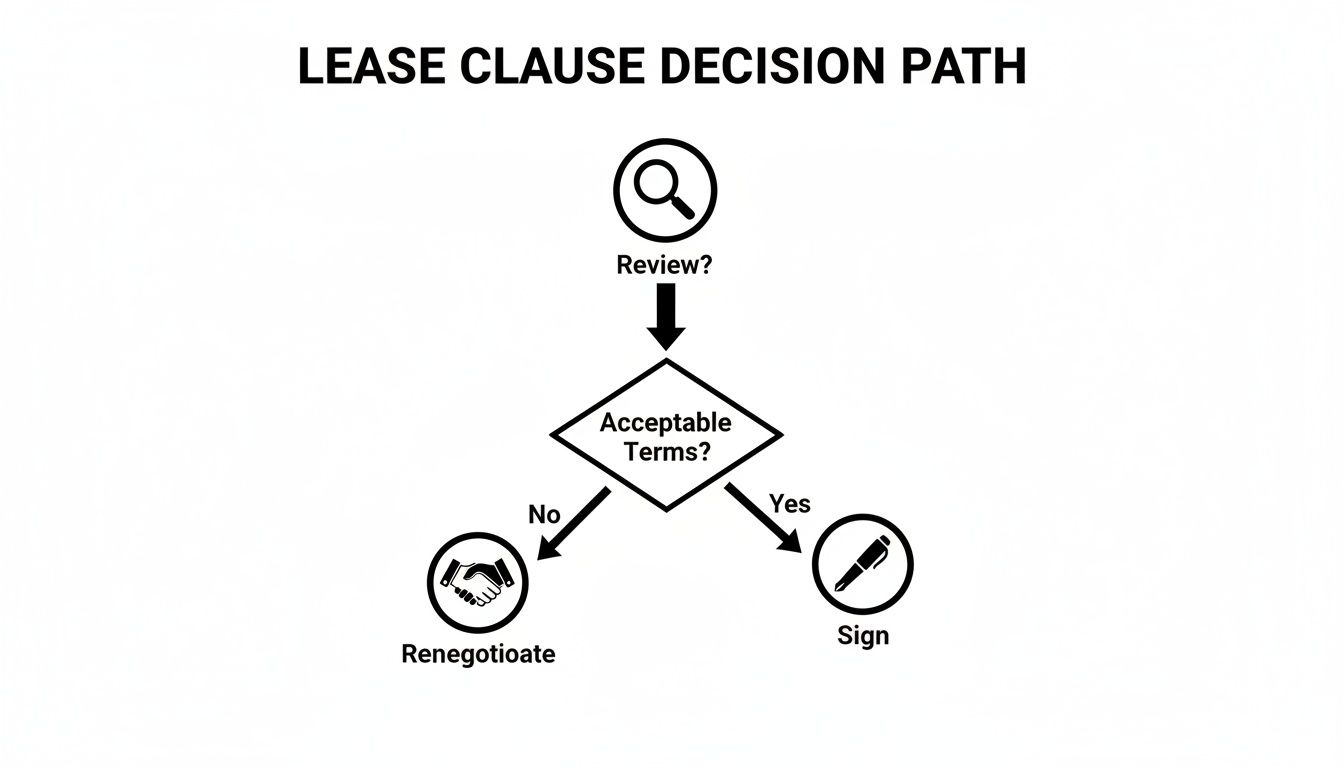
The image highlights a crucial point: if the terms aren't quite right, remember that renegotiation is a normal—and vital—part of the process before you sign on the dotted line.
Proven Tips for Negotiating Your Lease
Stepping into a lease negotiation feels like it’s all about haggling over the monthly rent, right? Not exactly. It's really your chance to shape a deal that gives you financial breathing room and the agility your business needs. Think of it less as a price fight and more as crafting a strategic tool.
While everyone wants to get the best price, the smartest negotiators know the real wins are hidden in the details—the clauses that give you flexibility and protect you from surprise costs down the road.
Look Beyond the Monthly Rent
A lower base rent is a fantastic win, but don't let it be your only focus. Landlords often have more wiggle room on things other than the rent itself, and these concessions can add up to huge savings over time.
Here’s where you should focus your energy:
- Cap Annual Increases: This is a big one. Push for a firm cap on how much your rent can go up each year. Locking in a fixed rate, like 3%, keeps your budget predictable and stable.
- Secure a Break Clause: Think of this as your emergency exit. A break clause gives you the right to terminate the lease early if things change, offering a crucial safety net if your business pivots or outgrows the space faster than expected.
- Bundle in Amenities: Don't be shy about asking for perks to be thrown in. This could be anything from dedicated parking spots and included office furniture to making sure high-speed internet is part of the deal at no extra charge.
Leverage Market Conditions to Your Advantage
Your bargaining power swings dramatically based on the local real estate market. Before you even think about starting a conversation, do your homework on local vacancy rates. A high vacancy rate means landlords are eager to fill their buildings, making them much more likely to agree to your terms.
Your negotiation strategy should always reflect the current market. In a tenant's market—where there are plenty of empty offices—you have the leverage to ask for much more than just a simple rent discount.
The way companies use office space has changed. Recent data shows that while plenty of leases are being signed, the average size of those leases has actually dropped by over 15% since before the pandemic. Businesses are leaning into smaller, more flexible footprints.
You can learn more about these office leasing trends from CoStar Group and use this information in your negotiation. Pointing out that your need for a short-term, flexible space is perfectly in line with current market demand can seriously strengthen your position.
Your Step-by-Step Checklist for Securing an Office

Finding a new office should be an exciting step forward, not a logistical headache. We’ve put together a practical checklist to walk you through the entire process—from figuring out what you need to unlocking the door on move-in day.
Phase 1: Define Your Needs
First things first: get clear on your non-negotiables. A little bit of planning upfront saves you from wasting time on spaces that are a poor fit and gives you a solid foundation for every conversation with landlords and providers.
-
Headcount and Growth: How big is your team right now? More importantly, where do you see it in the next few months? A short term office lease is flexible by nature, but it's smart to have a rough idea of your growth plans for at least the next six months.
-
Budget Realistically: Figure out the absolute maximum you can spend each month, all-in. Don't forget to factor in one-time hits to your cash flow, like a security deposit or any initial setup fees.
-
Location Priorities: What neighborhoods are a must-have? Is proximity to public transit critical for your team? Make a list of your top location requirements before you even start looking.
A well-defined needs assessment is the foundation of a successful office search. Knowing exactly what you need empowers you to quickly identify the right opportunities and negotiate from a position of strength.
Phase 2: Search and Finalize
Once you have your requirements locked down, it's time to hit the ground running. This phase is all about comparing your options, getting a feel for different spaces, and digging into the fine print.
-
Research and Tour Spaces: Pull together a shortlist of promising offices and get those tours booked. When you're on-site, pay attention to everything—the building's condition, the shared amenities, even the general vibe. Does it feel like a place your team can thrive?
-
Review the Agreement: This is the most crucial step. Read the lease agreement from top to bottom, and then read it again. Double-check the core terms: lease duration, renewal options, what happens if you need to leave early, and any "make good" clauses that spell out the condition you must leave the space in.
-
Plan Move-In Logistics: After the ink is dry, it's time to get organized. Coordinate with the office provider on getting the keys, setting up internet access, and scheduling any furniture deliveries. Nail down a firm move-in date and make sure your entire team is in the loop.
Getting through this process smoothly sets the stage for a great start in your new space. If you need a hand exploring what’s out there, contact our team for expert guidance and we'll be happy to help.
Common Questions About Short-Term Office Leases
Even after you've run the numbers and weighed the pros and cons, a few lingering questions usually pop up. It’s completely normal. Getting straight answers to these common sticking points is the last piece of the puzzle before you can confidently sign on the dotted line.
Let's tackle the questions we hear most often.
What Happens if My Team Grows or Shrinks?
This is the classic "what if" scenario, and it’s precisely where a short-term lease proves its worth. Good providers get it—business is unpredictable. If you suddenly need to hire five more people, you can often just move into a larger office down the hall with very little fuss.
The same logic applies if you need to scale back. When your current term ends, you can simply move into a smaller, more cost-effective space. The trick is to have this conversation before you sign. Make sure your agreement has clear language about your options for expanding or contracting your footprint.
Are Utilities and Internet Always Included?
Usually, yes, but you can't assume. A major draw of flexible office space is the all-in-one pricing model where high-speed Wi-Fi, electricity, HVAC, and even janitorial services are rolled into one predictable monthly payment. It makes budgeting so much simpler.
That said, always confirm what's in the package. Ask for an itemized list of every included service and utility. The last thing you want is a surprise electricity bill when you thought everything was covered.
A lease gives you a formal right to a specific space, creating a legally protected landlord-tenant relationship. A license is just permission to use a space, which can be taken away much more easily.
How Is a Lease Different from a License Agreement?
This is a really important legal distinction that many people overlook. A lease grants you exclusive rights to a particular office for a set amount of time. You're a formal tenant, which comes with significant legal protections under landlord-tenant law.
A license agreement, on the other hand, is more like a permission slip. It's common for things like hot-desking in a coworking space. It doesn't grant you exclusive possession of a space and typically offers far fewer rights and less security. A proper short-term office lease will almost always be a true lease, giving you that stronger legal footing.
What Kind of Security Deposit Should I Expect?
Just like with a traditional lease, you'll need to put down a security deposit. It’s the landlord’s safety net in case of property damage or if you miss a rent payment. The good news is that for short-term leases, the deposit is usually much more manageable.
You can typically expect to pay a deposit equal to one to two months' rent. As long as you leave the office in the same condition you found it (minus a little normal wear and tear), you'll get that money back at the end of your term.
Ready to find a flexible workspace that saves you time and money? Seat Leasing BPO offers fully equipped, move-in-ready office solutions designed for agility and growth. Learn more about our flexible office solutions.