A Philippines outsourcing company is more than just a vendor—it's a partner that handles specific business functions for you, from customer service to complex IT projects. While cost savings are often the initial draw, the real value lies in gaining a competitive edge by tapping into a deep well of talent and operational excellence.
Why The Philippines Is Your Strategic Growth Partner

The conversation around outsourcing has changed. It's no longer just about cutting costs; it's a strategic move to build a more resilient, scalable business. The Philippines has become the go-to destination for this, attracting everyone from agile startups to Fortune 500 companies.
To get why the Philippines is such a powerhouse, it helps to first understand the core drivers behind why companies choose to outsource work in the first place. Seeing the bigger picture makes it clear why the Philippines checks all the right boxes.
A Powerful Ecosystem For Business
The country’s status as a global leader in outsourcing didn’t happen by accident. It's the direct result of a concerted effort to build an environment where foreign businesses can set up shop and succeed. This supportive ecosystem is built on a few non-negotiable pillars.
- World-Class Talent: The Philippines has a massive pool of young, educated professionals. With a median age of just 25, the workforce is tech-fluent, adaptable, and hungry to make an impact.
- Cultural and Language Synergy: High English proficiency is the baseline here, not an added perk. This, combined with a strong cultural affinity with Western business practices, breaks down communication barriers and makes collaboration feel effortless.
- Governmental Support: The Philippine government actively champions the BPO industry. Agencies like the Philippine Economic Zone Authority (PEZA) provide tangible benefits and incentives, making it easier and more profitable to operate.
More Than A Vendor, A Partner
Think of your business as a high-performance race car. To win, you need a top-tier engineering team and premium parts. A Philippines outsourcing company gives you both—the expert crew and the robust infrastructure you need to pull ahead of the competition.
The real game-changer is turning fixed operational costs into flexible, variable expenses. This agility allows you to scale your team up or down based on market demand, without the dead weight of long-term leases or heavy capital investments.
This guide is your roadmap to plugging into this dynamic environment. We'll walk through the different service models, from traditional Business Process Outsourcing (BPO) to flexible, asset-light solutions. If you need a team on the ground fast, you can explore how facilities like Building 24 offer plug-and-play offices that are ready to go. Let's get you set up to scale smarter.
What Kinds of Services Can You Actually Outsource?
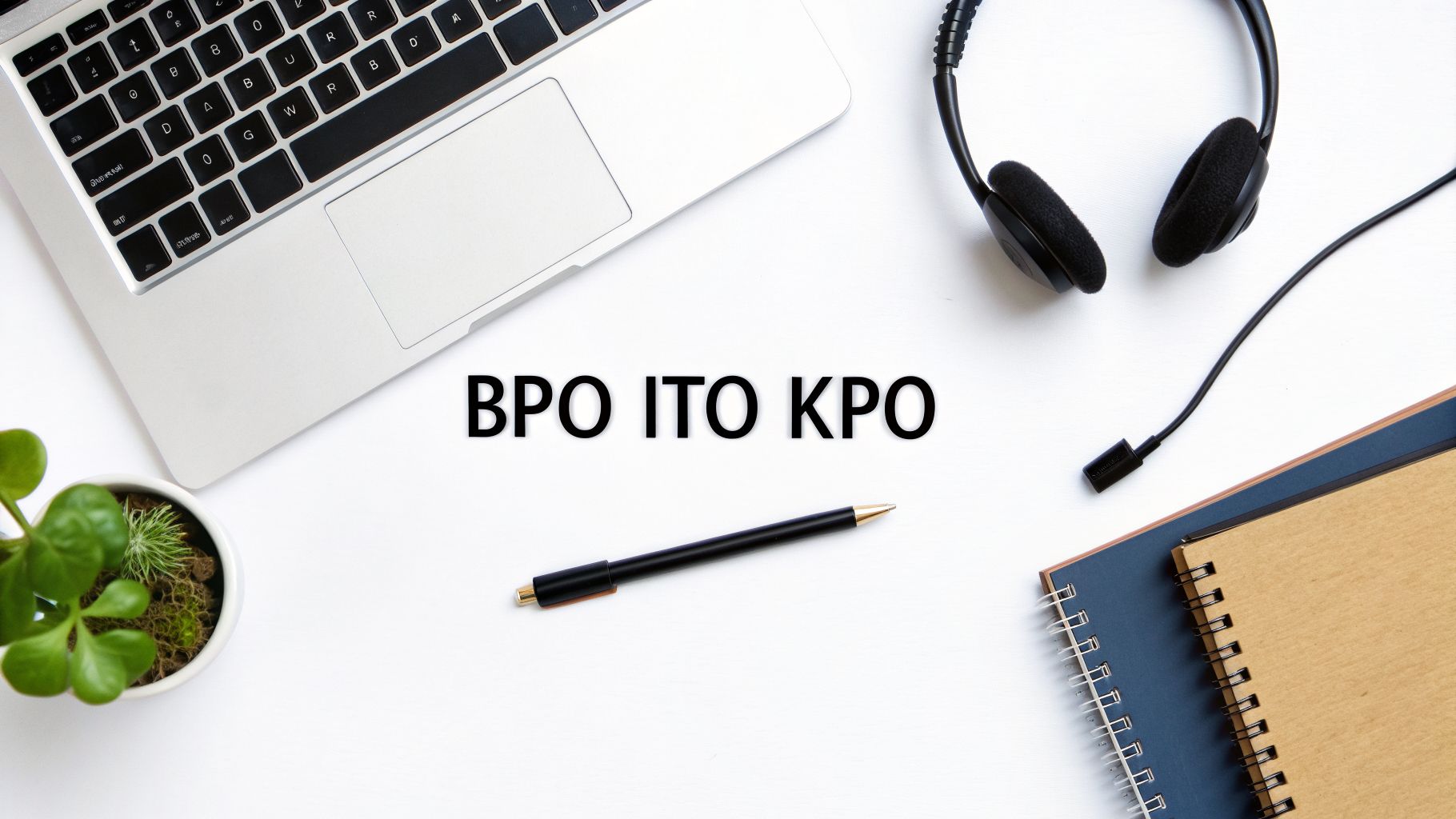
When you start exploring a partnership with a Philippines outsourcing company, you'll find the services are typically grouped into three main buckets. Getting a handle on what each one offers is the key to matching the right service to your specific business goals.
Think of it as hiring for different departments in your company. You need a team for your daily operations, a crew to handle your tech, and a group of specialists to provide expert analysis. Outsourcing lets you tap into a global talent pool to fill all these roles.
Business Process Outsourcing (BPO)
This is the one most people have heard of. BPO, or Business Process Outsourcing, is all about handing off the essential, recurring tasks that keep your business running day-to-day. It’s like hiring a dedicated team to manage your operational workflow.
These services can be anything from customer-facing roles to crucial back-office functions. A common misconception is that BPO just means call centers, but that’s only a small part of the picture. Understanding the difference between call centre and BPO helps clarify that a call center is just one specific service under the huge BPO umbrella.
Common BPO services include:
- Customer Support: Answering customer questions via phone, email, and live chat.
- Back-Office Support: Managing tasks like data entry, payroll, or content moderation.
- Sales & Lead Generation: Running outreach campaigns and qualifying new leads for your sales team.
Information Technology Outsourcing (ITO)
Next up is ITO, or Information Technology Outsourcing. This is your on-demand tech department, focusing entirely on your IT infrastructure, software development, and technical support needs.
Instead of the massive expense and headache of building and retaining an in-house IT team, you can access specialized expertise when you need it. This is a game-changer for businesses that are tech-dependent but don't have a CTO or a large IT budget.
One of the biggest wins with ITO is the ability to bring in experts for specific projects, like building a new mobile app or conducting a cybersecurity audit, without the cost of hiring them full-time.
Knowledge Process Outsourcing (KPO)
Finally, we have KPO, which stands for Knowledge Process Outsourcing. Think of this as your outsourced brain trust. KPO goes way beyond routine tasks to tackle work that requires deep subject matter expertise, critical thinking, and advanced analytical skills.
This isn't about following a script; it’s about providing judgment-based analysis and insights. A Philippines outsourcing company with a strong KPO offering gives you access to professionals who can interpret complex data and drive high-level strategy. For any business aiming to be data-driven, a KPO partner can be an incredible asset.
You can learn more about the types of services included with our offerings to see how they directly support these advanced functions.
The Real Benefits of Partnering with a Philippine Firm
Let’s get straight to the point. When you partner with an outsourcing company in the Philippines, you’re not just chasing a trend. You’re tapping into a proven ecosystem that delivers tangible results, strengthening your business from the inside out.
The most obvious and immediate win is the dramatic cost savings. For businesses based in North America, Europe, or Australia, the difference in labor and overhead costs is staggering. We’re often talking about saving up to 70% on salaries alone for comparable roles, and that’s without sacrificing the quality of the work.
Think about what that really means. It’s not just a line item on a spreadsheet; it’s a strategic advantage. Suddenly, you have capital freed up to pour back into what really matters—developing your product, ramping up marketing, or expanding your sales team. This is how you accelerate growth.
Access World-Class Talent and Cultural Synergy
The Philippines has an incredibly deep and educated talent pool. Each year, thousands of ambitious, skilled graduates enter the workforce, bringing with them a powerful and inherent work ethic. You’re not just hiring staff; you’re gaining access to dedicated professionals.
But what really makes the difference is the cultural connection to the West. English isn't just a second language here; it's an official language used in business and higher education. This means communication barriers that can plague outsourcing relationships simply don't exist.
You’ll find that Filipino professionals are known for their politeness, genuine hospitality, and a deeply ingrained customer-first attitude. This isn't just a nice-to-have—it's a huge asset, especially in customer-facing roles, leading directly to happier customers and stronger brand loyalty.
This natural alignment means your team in the Philippines feels less like a distant vendor and more like a true extension of your local office. They get the nuances of Western business culture, which makes day-to-day collaboration feel remarkably smooth and intuitive.
Achieve True 24/7 Operations and Scalability
The time zone difference is another game-changer. For a company in the US, your Philippine team is just getting their day started as your local team signs off. This creates a natural "follow-the-sun" model, allowing your business to run continuously, 24/7. Customer support tickets are resolved overnight. Development tasks are completed while you sleep. Progress never stops.
This isn’t a new phenomenon. What started in 1992 has exploded into a $38 billion industry by 2024, providing jobs for 1.82 million full-time workers. And it's not slowing down. The Philippines has its sights set on becoming a $59 billion industry with 2.5 million jobs by 2028. The country is all-in. You can discover more insights about the continued growth of BPO in the Philippines on 365outsource.com.
Finally, partnering with a Philippine firm gives you incredible flexibility. Need to scale your team from five people to fifty? It can happen almost instantly, without the headaches and high costs of traditional recruiting, onboarding, and finding more office space. This agility allows you to jump on market opportunities or trim down during slower cycles, keeping your business lean and ready for anything.
Navigating Costs and Regulations with Confidence
Getting a handle on the financial and legal side of outsourcing to the Philippines is crucial, but it’s not as daunting as it might seem. The good news is the entire system is built to be business-friendly, especially when you have an experienced local partner showing you the ropes.
Think of it this way: when you’re building a budget, you’re really just putting together a puzzle. The pieces are the different cost drivers, and once you see how they fit together, the final picture becomes clear. You can create a realistic financial plan with no hidden surprises.
When you partner with a Philippines outsourcing company, your costs typically boil down to four key areas.
- Labor Costs: This is the biggest piece of the puzzle, covering your team’s salaries and benefits. It's also where you'll find the most significant savings compared to what you’d pay in Western countries.
- Office Space: This is the rent for the physical workspace. Costs can vary quite a bit depending on the city and the quality of the building.
- Technology and Infrastructure: This bucket includes everything from computers and high-speed internet to specialized software and cybersecurity defenses.
- Administrative Overhead: This covers all the background work—HR, payroll, legal compliance, and the day-to-day management of the facility.
Understanding the Legal Framework
The Philippine government isn't just a passive observer; it actively works to attract foreign businesses to its outsourcing industry. One of the cornerstones of this effort is the Philippine Economic Zone Authority (PEZA), a government body that oversees special economic zones throughout the country.
Companies that set up shop in PEZA-registered zones get some serious perks. We're talking about benefits like income tax holidays and the ability to import equipment duty-free, which directly cuts your operational costs and makes getting started much simpler.
When you team up with a provider already located in a PEZA zone, they pass those financial advantages on to you. It's one of the smartest ways to get the most bang for your buck while staying fully compliant with local regulations.
Compliance and Visas Simplified
This is another area where having the right partner is a game-changer. The Philippines has strong employment laws and takes data security very seriously, particularly with its Data Privacy Act of 2012. This law is on par with international standards, ensuring your sensitive information is protected.
- Labor Standards: Your local partner will manage all HR functions according to Philippine labor law, from contracts and benefits to payroll. This shields you from the legal complexities of being an employer in another country.
- Data Security: A reputable provider will already have strict protocols in place to protect your intellectual property and customer data, so you don't have to build a security framework from scratch.
- Expatriate Visas: If you plan on sending a manager or key employee to the Philippines to oversee operations, the visa process is straightforward. Your outsourcing partner can handle the paperwork, turning a potentially complex task into a simple, predictable one.
At the end of the day, a good Philippines outsourcing company handles all this complexity for you. You don’t need to become an expert in Philippine law. They take care of the administrative heavy lifting so you can stay focused on what really matters: growing your business.
Choosing the Right Outsourcing Model for Your Business
Once you’ve decided to work with a Philippines outsourcing company, your next big decision is how you’ll work with them. This isn't just a minor detail; it's the strategic choice that defines your level of control, your costs, and how easily you can scale your operations.
Think of it this way: you wouldn't use a sledgehammer to hang a picture frame. The tool has to match the job. Picking an outsourcing model is the same—it must align perfectly with your specific business goals, budget, and how you like to operate.
Staff Augmentation: Your Rented Expert
Staff Augmentation is probably the most straightforward model. It’s like hiring a specialist on a temporary contract. You identify a skill gap on your team—maybe you need a senior developer for a six-month project or a few extra customer support agents for your busy season—and the outsourcing provider gives you the right person.
The key here is that they become your employee, at least for a while. They report to your managers, use your systems, and integrate directly into your existing team. You get the expertise you need, fast, without the long-term overhead of a permanent hire. This is perfect if you have strong internal leadership and just need to plug in some extra horsepower.
Managed Services: Outsourcing the Outcome
Managed Services is a completely different ballgame. Instead of renting an individual, you’re handing over an entire function to your partner and asking them to run it for you. You aren't managing people anymore; you're managing results.
You define the outcome you need, such as, "Handle all our Tier 1 technical support and maintain a 95% customer satisfaction score." Your outsourcing partner then becomes responsible for everything—the team, the processes, the technology—to deliver on that promise, all governed by a Service Level Agreement (SLA). This model is ideal for offloading non-core functions you don't have the time or expertise to manage internally.
This simple diagram can help frame your initial thinking around costs.
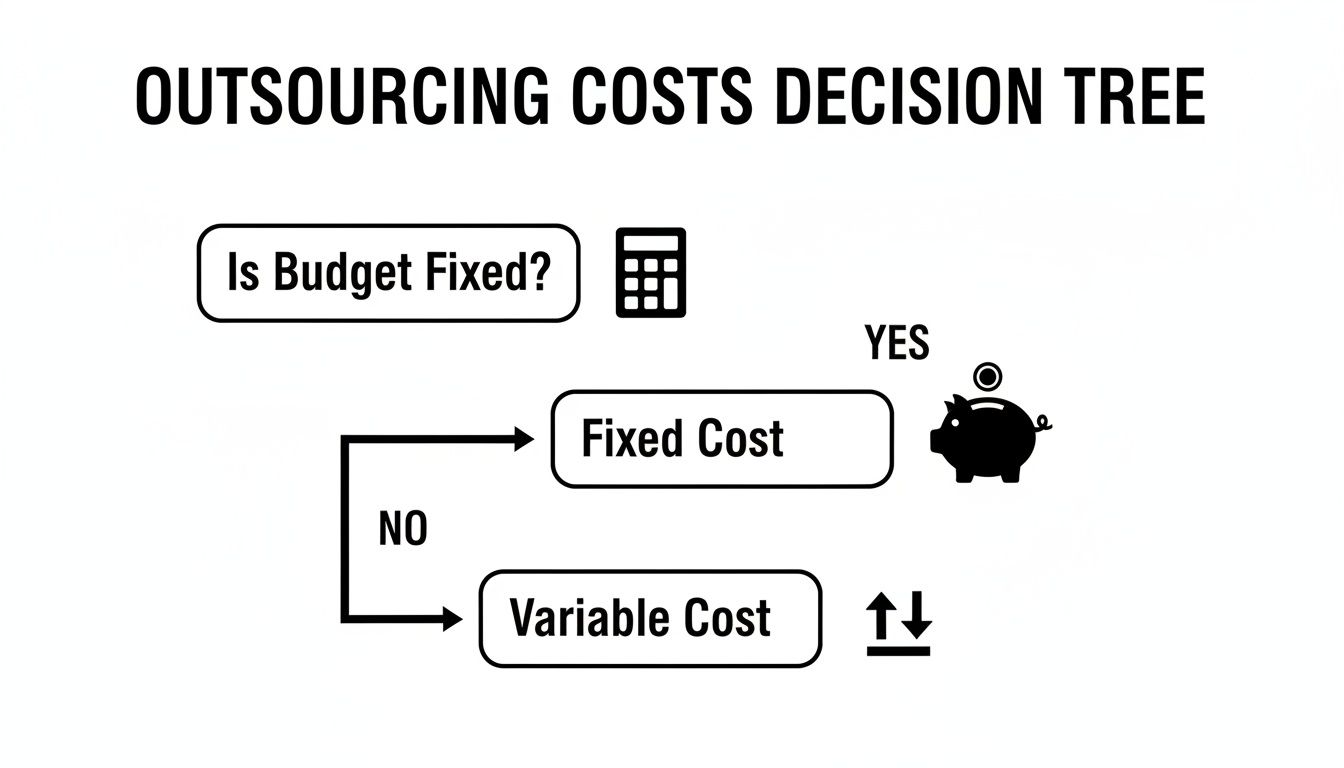
As you can see, if you're working with a fixed budget, you'll naturally gravitate toward models that offer predictable, fixed costs. If your needs are more fluid, a variable cost structure might be a better fit.
Seat Leasing: Your Instant Office
Seat Leasing is a fantastic hybrid model that has become incredibly popular in the Philippines. It gives you the best of both worlds: the direct control of staff augmentation with the hassle-free infrastructure of a managed service.
Your provider handles the "office" part—the physical space, workstations, high-speed internet, IT support, and utilities. You bring in your team and manage their day-to-day work directly. It's like getting a fully-equipped, move-in-ready office for your team from day one.
This approach dramatically cuts down on your setup time and overhead, making it a go-to for startups and SMBs who want to get started quickly while keeping a close watch on their team’s performance.
To help you decide which model is the right fit, here's a side-by-side comparison of the key features.
Outsourcing Model Comparison
This table compares the three main outsourcing models to help you decide which is best for your business needs.
| Feature | Staff Augmentation | Managed Services | Seat Leasing |
|---|---|---|---|
| Control | High (direct management of staff) | Low (manage outcomes via SLAs) | High (direct management of staff) |
| Responsibility | You manage tasks, performance, and quality. | Provider manages people, processes, and tech. | You manage tasks; provider manages office and infrastructure. |
| Integration | High (staff become part of your in-house team) | Low (function operates as a separate entity) | High (your team, your culture, in their office) |
| Best For | Filling skill gaps, short-term projects, high control. | Offloading entire non-core functions, focusing on SLAs. | Fast launch, full team control, and reduced overhead. |
| Cost Structure | Variable (per person) | Fixed (per outcome/SLA) | Fixed (per seat/person), predictable monthly cost. |
Ultimately, the right choice depends entirely on your comfort level with control versus delegation and your long-term business strategy.
The Philippine BPO industry, which really took off with the call center boom in the late 1990s, has matured into a global force. It's projected to hit $32.15 billion in revenue in 2024. For startups and SMBs, turnkey solutions from providers that manage all the IT and offer flexible terms can lead to savings of up to 80%. This is especially relevant now, as 83% of companies are embracing hybrid work. You can learn more about the history of BPO in the Philippines to understand how it became the powerhouse it is today.
Your Checklist for Selecting the Right Partner
Getting this right is everything. Picking a Philippines outsourcing company will be the single most important decision you make on this journey. The right partner can feel like a natural extension of your team, setting you up for smooth, predictable growth. The wrong one? It’s a fast track to headaches, wasted money, and lost time.This checklist is your framework for doing the proper due diligence. Think of it like this: you wouldn't buy a house without a thorough inspection. Treat this decision with the same level of seriousness—vet your potential partner completely before you even think about signing a contract.
Experience and Industry Fit
First things first, you need to look at their track record. It's not just about how long they've been in business, but who they've been in business for. Have they actually worked with clients in your specific industry? A partner who already speaks your language and understands your market's unique quirks is invaluable.
Don't be afraid to press for details. Ask them to show you case studies and concrete examples of work they've done that's directly relevant to what you need. If they can’t point to specific, proven results that look a lot like what you want to achieve, that's a major red flag.
Technology and Security Protocols
Remember, this partner will be handling sensitive company and customer information. You need to have absolute, rock-solid confidence in their tech infrastructure and how they approach security.
- Technology Stack: What kind of hardware and software are they running? Is it modern and reliable? The last thing you want are technical hiccups and downtime because their systems can't keep up.
- Data Security: How, specifically, do they protect your data? Ask them about their compliance with the Philippines' Data Privacy Act of 2012, what cybersecurity measures are in place, and what physical security looks like at their offices.
- Business Continuity: What happens if the power goes out or a typhoon hits? Any serious provider will have a clear disaster recovery plan with backup systems ready to go.
A provider's attitude toward security says a lot about their professionalism. If you get vague answers or they seem hesitant to share details, consider it a serious warning sign.
Talent and Contract Scrutiny
At the end of the day, an outsourcing company is its people. You need to dig into how they find, train, and—most importantly—keep their talent. A revolving door of employees is a recipe for inconsistent service quality and will ultimately cost you.
Finally, read the contract. Then read it again. Look for total transparency in the pricing, clearly defined Service Level Agreements (SLAs), and flexible terms. You need a contract that allows you to scale your team up or down as your business needs change. A true partner’s agreement will feel like a collaboration, not a cage.
For companies that want managed infrastructure and maximum flexibility, exploring seat leasing can be a great starting point.
Common Questions About Outsourcing to the Philippines
Even after you see the benefits, a few practical questions always come up. It's completely normal. Let's walk through the answers to the most common ones we hear from business owners who are new to outsourcing in the Philippines.
How Do I Effectively Manage a Remote Team So Far Away?
Managing a team from thousands of miles away sounds like a huge challenge, but it's more straightforward than you might imagine once you have the right systems in place. Think of it less like managing people in a different building and more like managing a different department—it all comes down to clear communication and established processes.
Daily stand-up meetings, project management tools like Asana or Trello, and regular video calls are your best friends here. They keep everyone connected and aligned. Most importantly, you have to empower your team. Set clear expectations and define your key performance indicators (KPIs), then trust your Filipino team members to deliver. Their work ethic is legendary for a reason.
A good BPO partner will also have local managers on the ground who act as your supervisors, ensuring everything runs smoothly without you needing to be there.
What Cultural Nuances Should I Know for Smooth Collaboration?
Filipino culture is famously polite, respectful, and non-confrontational. This creates a wonderfully pleasant work environment, but it does mean you need to adjust your feedback style. It's best to deliver constructive criticism gently and, whenever possible, in private. On the flip side, public recognition for a job well done is a powerful motivator.
Filipinos often use "sir" or "ma'am" as a sign of respect, and a friendly, personal approach goes a long way. Building a genuine rapport is the key to unlocking a highly loyal and dedicated team.
How Secure Is My Company's Sensitive Data?
This is a non-negotiable, and any reputable provider in the Philippines treats data security with extreme seriousness. The country has its own comprehensive data protection law, the Data Privacy Act of 2012, which is designed to meet tough international standards.
When you vet a Philippines outsourcing company, make sure they have:
- Strict physical security at their facilities, including access controls and surveillance.
- Modern cybersecurity defenses like firewalls, endpoint protection, and threat detection systems.
- Well-documented compliance protocols to protect your intellectual property and client information.
How Quickly Can I Actually Get Started?
This is where you see a massive difference between outsourcing models. If you choose a solution like seat leasing, you can be up and running in a few weeks, not the typical months it takes to set up a foreign entity.
The provider already has the office, the IT infrastructure, and even the recruitment pipeline ready to go. This allows you to completely bypass the headaches of finding real estate, navigating local regulations, and building an office from scratch. You can get straight to work.
Ready to get started without the usual overhead and delays? Seat Leasing BPO offers fully managed office spaces that allow you to launch your team quickly and affordably. Learn how you can save up to 80% on costs at https://seatleasingbpo.com.