When you think of a medical call center, you might picture someone simply answering phones. But that’s just a tiny piece of the puzzle. In reality, a medical call center is the communications hub for an entire healthcare practice or hospital system, handling every touchpoint that doesn't happen face-to-face.
It's the first voice a nervous patient hears when scheduling a critical appointment. It's the helping hand that guides someone through a confusing insurance question. Essentially, this center serves as the digital front door for patients, shaping their entire experience from the very first call.
The Command Center of Patient Communication
Think of it less like a switchboard and more like an air traffic control tower for patient care. Every incoming call, email, or patient portal message is a "flight" that needs to be routed correctly and efficiently. The goal is to ensure every patient inquiry "lands" with the right person—be it a scheduler, a billing specialist, or a clinical nurse—without frustrating delays or turbulence.
This isn't just about phone calls anymore. A modern medical call center is a multi-channel operation. Patients now expect to communicate via secure text messages, online chat, and patient portal messaging. The center’s job is to seamlessly manage all these conversations, meeting patients on the platform they prefer.
More Than Just Answering Phones
The sheer scale of these operations can be staggering. A multi-practice healthcare group can easily field 2,000 calls daily, which breaks down to about 220 calls every hour. With that kind of volume, efficiency isn't just a goal; it's a necessity.
Unfortunately, many centers struggle to keep up. The average patient hold time is currently 4.4 minutes, a far cry from the industry benchmark of just 50 seconds. You can explore the data behind healthcare call center statistics to see just how big the gap is between patient expectations and reality.
A medical call center is where trust is built or broken, one conversation at a time. It’s the first impression, the ongoing relationship, and the final follow-up in the patient journey.
At their core, these centers are critical for a few key reasons. They directly impact a clinic's reputation, operational stability, and even its financial health.
First, let's look at the main services these centers provide.
Medical Call Center Core Functions at a Glance
This table breaks down the primary responsibilities of a typical medical call center, showing the breadth of services they manage on a daily basis.
| Function Type | Description | Primary Goal |
|---|---|---|
| Patient Triage & Routing | Assessing a caller's needs to direct them to the appropriate department or individual (e.g., nurse line, billing). | Reduce transfers and ensure patients reach the right person on the first try. |
| Appointment Management | Scheduling, confirming, rescheduling, and canceling patient appointments across various providers and locations. | Maximize provider schedules, reduce no-shows, and improve patient access to care. |
| Information & Inquiries | Answering general questions about office hours, locations, services offered, and pre-visit instructions. | Provide fast, accurate information to free up clinical staff from administrative tasks. |
| Billing & Insurance Support | Handling patient inquiries about statements, processing payments, and clarifying insurance coverage questions. | Improve revenue cycle management and reduce patient frustration with financial matters. |
| Physician Referrals | Assisting patients and other providers in finding and scheduling appointments with specialists within the network. | Keep patients within the health system and streamline the referral process. |
As you can see, the scope goes far beyond what a traditional receptionist could ever handle, blending customer service with complex administrative and clinical support functions.
The Human Element and the Technology Behind It
A great medical call center agent is a unique blend of empathy and efficiency. They need to be compassionate listeners who can calm an anxious parent, but they also need to navigate complex scheduling software and medical terminology with precision. This human touch is what makes or breaks the patient experience.
That human skill is powered by a suite of background technologies. Sophisticated call routing systems, electronic health record (EHR) integrations, and scheduling platforms all work together. This integration gives agents the tools they need to resolve issues quickly and accurately, turning a potentially stressful call into a positive interaction.
Ultimately, a well-run medical call center achieves three vital goals for any healthcare provider:
- Improves Patient Access: Makes it simple for patients to get the appointments and information they need, when they need it.
- Boosts Operational Efficiency: Takes administrative burdens off clinical staff, allowing nurses and MAs to focus on hands-on patient care.
- Enhances Patient Satisfaction: A helpful, efficient, and compassionate interaction leaves a lasting positive impression, strengthening patient loyalty.
Understanding this foundational role makes it clear why so many healthcare organizations are focused on getting their call center operations right. It’s a mission-critical function that impacts everything from patient outcomes to the bottom line.
Core Services: Inbound, Outbound, and Telehealth Integration
A medical call center really has two primary functions: reacting to patient needs as they come in and proactively reaching out to them. Think of it as a conversation. One side listens and responds (inbound), while the other starts new conversations to keep patients healthy and informed (outbound).
These two functions aren't separate, siloed operations. They're constantly working together. A single patient's journey often weaves between them, creating one continuous, supportive experience from their first question to their post-visit follow-up.
Inbound Services: The Patient's First Point of Contact
When a patient needs help now, they turn to your inbound team. This is the reactive, on-demand side of the call center, where agents handle a steady flow of calls, messages, and chats. Their job is to get patients the right answers and solutions, quickly and with compassion.
These interactions are often the very first impression a patient has of your practice, so getting them right is crucial. Key inbound responsibilities include:
- Appointment Management: This is the bread and butter of any medical call center. It’s not just about booking a time slot; it’s about navigating complex schedules for multiple doctors, locations, and specialties to find the perfect fit for the patient.
- Billing and Insurance Inquiries: Money talk is always sensitive. Agents need special training to walk patients through confusing statements, explain coverage details, and discuss payment options with clarity and patience.
- Nurse Triage and Clinical Routing: When a call involves medical symptoms, it’s escalated. Specially trained agents or nurses use established protocols to assess the situation and direct the patient to the right level of care—whether that’s a same-day appointment, a trip to the ER, or simple self-care advice for home.
Outbound Engagement: The Proactive Arm of Patient Care
While inbound services react, outbound services act first. This proactive side of the call center focuses on connecting with patients before they even realize they need to pick up the phone. The goal is simple: improve health outcomes, keep patients happy, and make clinic operations run smoother.
This kind of outreach turns a call center from a simple administrative hub into a true partner in a patient's health. A single reminder call can prevent a costly no-show, freeing up that appointment for someone else who needs it.
Proactive outreach is the difference between simply managing care and actively improving it. It shows patients you are invested in their well-being beyond the walls of the clinic.
Some of the most common outbound tasks include:
- Appointment Reminders: Using automated or live calls and texts to reduce no-show rates, which are a massive source of lost revenue for healthcare providers.
- Preventative Care Outreach: Contacting patients to schedule annual physicals, flu shots, mammograms, or other recommended screenings.
- Patient Satisfaction Surveys: Gathering feedback after an appointment to pinpoint exactly what’s working and what needs to be improved.
- Post-Discharge Follow-Up: Calling patients after a hospital stay to make sure they understand their medication, have scheduled follow-up visits, and are recovering as expected.
Weaving It All Together: Telehealth Integration
The final piece of the modern medical call center is its role as the command center for telehealth. These centers aren't just for phone calls anymore; they are the scheduling and support hub for all virtual care.
When a patient requests a video consultation, it’s the call center agent who coordinates the appointment, sends the secure meeting link, and troubleshoots any technical issues for the patient.
This flow chart shows just how smoothly a patient moves through a well-run system.
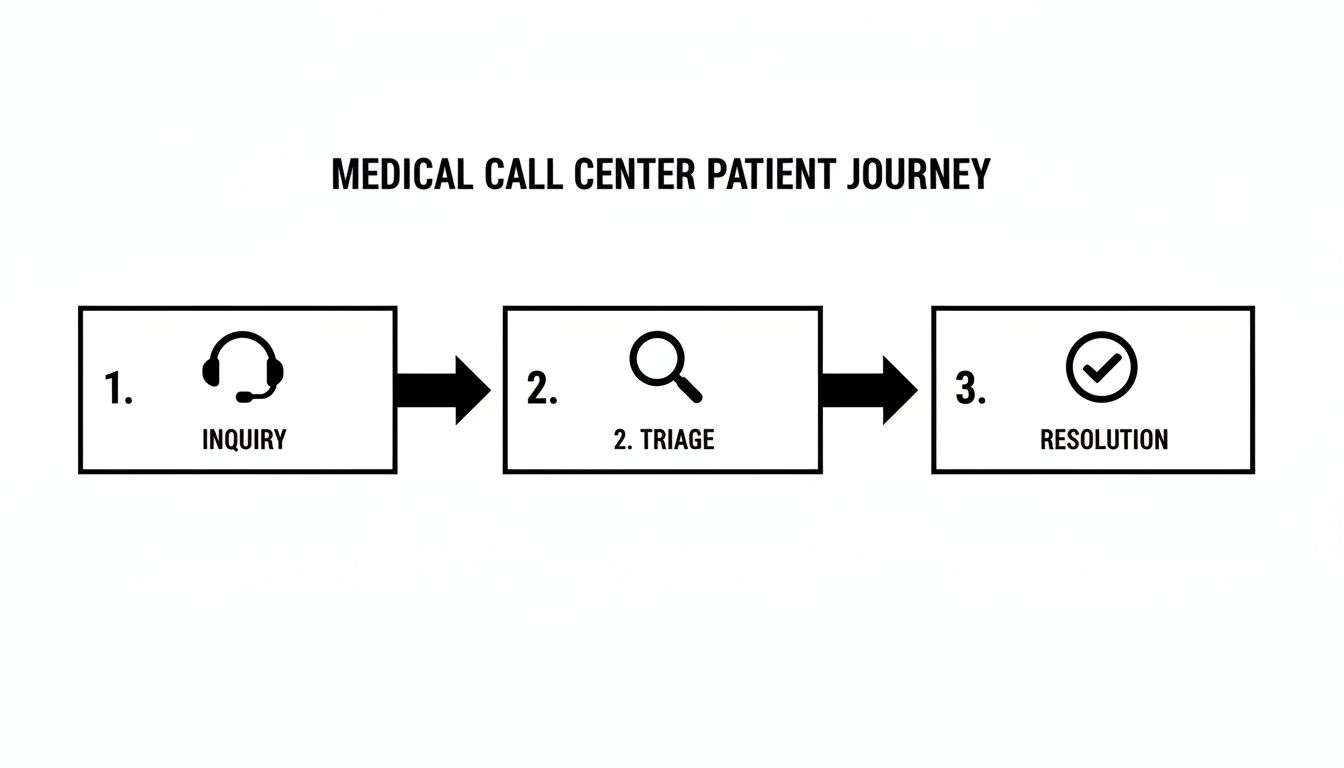
As you can see, a patient's need is quickly identified and routed to the best solution, whether that's an inbound agent, an outbound follow-up, or a telehealth visit. By bringing all these services together, a medical call center builds a seamless, supportive experience that fosters real patient trust.
Navigating HIPAA Compliance and Data Security
In a medical call center, trust is everything. And that trust is built on one simple promise: keeping patient information completely private. Every call, every chat, every piece of data handled is sensitive, making security the absolute bedrock of your entire operation.
This is where the Health Insurance Portability and Accountability Act (HIPAA) comes in. It’s not just another regulation; it's the federal law that dictates exactly how Protected Health Information (PHI) must be handled. Think of PHI as anything that can be used to identify a patient—from their name and phone number to their diagnosis and payment history.
Being HIPAA compliant means treating every digital file with the same level of security as a physical medical chart locked away in a doctor's office.

Building this digital fortress isn't about having a single strong password. It requires layers of defense built into every part of the call center's technology and processes.
The Pillars of a HIPAA Compliant Call Center
To properly secure PHI in a fast-paced call center, you need a strategy with multiple fronts. These measures aren’t optional—they work together to create an environment where patient data stays confidential. To keep operations secure and aligned with rules like HIPAA, it's essential for medical call centers to implement robust data security practices.
Here are the non-negotiables:
- Data Encryption: All data, whether it’s stored on a server (at rest) or being sent over a network (in transit), must be encrypted. This scrambles the information, making it completely unreadable to anyone without the specific key to unlock it.
- Secure Networks and Firewalls: Your network is the gateway to your data. It must be defended with powerful firewalls and security protocols that act as a digital gatekeeper, blocking unauthorized attempts to get in.
- Strict Access Controls: Not everyone on your team needs to see every piece of patient information. Role-based access control ensures agents can only view what is absolutely necessary for their specific task, which dramatically reduces the risk of a breach.
- Regular Audits and Monitoring: You can't just set it and forget it. You need systems that constantly monitor for suspicious activity, flagging potential threats in real time. Regular, formal audits are also crucial to verify that every security policy is being followed to the letter.
But all the technology in the world is only half the battle. The human element is just as, if not more, important.
A data breach can cost a healthcare organization an average of $11 million, but the loss of patient trust is immeasurable. Compliance is not just about avoiding fines; it's about upholding a fundamental promise to protect patient privacy.
Building a Culture of Security
At the end of the day, your people are your first and last line of defense. Technology can't stop a well-meaning employee from clicking on a phishing link. That’s why rigorous, ongoing training is one of the most critical investments you can make.
Every single person, from the newest agent to the head of IT, has to understand their role in protecting patient data. This starts from day one and never stops.
- Initial Onboarding: Get them started right with in-depth training on HIPAA regulations, privacy rules, and your specific security procedures.
- Ongoing Education: The threats are always changing, so your training should, too. Regular refreshers keep your team sharp and aware of the latest compliance standards.
- Security Drills: The best way to prepare for an attack is to practice. Simulating phishing attempts or other breach scenarios tests your team’s awareness and solidifies response protocols.
Beyond your internal team, you also have to consider your partners. If you work with any third-party vendor that might come into contact with PHI—like an outsourced call center provider—HIPAA requires a Business Associate Agreement (BAA). This is a legally binding contract that holds your partner to the exact same data protection standards you follow. You can learn more by exploring our detailed privacy policy to understand our commitment to data security.
For healthcare organizations that want to go above and beyond, HITRUST certification is the gold standard. This framework is even more comprehensive than HIPAA, blending multiple security standards into a single, verifiable approach to risk management. Achieving HITRUST certification is a clear signal that you are unequivocally dedicated to protecting sensitive data, setting your call center apart as a leader in security.
The Technology and People Powering Modern Call Centers

A great medical call center is a careful balance of two critical elements: the right technology and the right people. You simply can't have one without the other. The most advanced software in the world is just a paperweight without a trained professional behind the screen, and the most caring agent can't do much without the tools to solve patient problems.
This combination of high-tech and "high-touch" is what truly sets an exceptional call center apart. The goal is to build a system where technology automates the repetitive work, freeing up your team to focus on what humans do best—building trust and providing a genuine, caring connection.
The Essential Technology Stack
Every smooth patient interaction is powered by a suite of integrated software. This "tech stack" is the engine that keeps a modern medical call center running efficiently, accurately, and compliantly. Think of each piece as a specialist working to manage the flow of information.
Here are the key technologies you'll find:
- Customer Relationship Management (CRM): This is the operation’s central nervous system. A healthcare-specific CRM holds a complete history of every patient interaction, giving agents instant context on call history, past issues, and patient preferences. This allows for a truly personalized conversation every single time.
- Automatic Call Distribution (ACD): An ACD is the digital traffic cop. It routes incoming calls to the best-suited agent or department based on rules you set, like an agent’s specific skills, their availability, or what the caller needs. The result is shorter wait times and less frustration.
- Interactive Voice Response (IVR): A modern IVR is much more than a simple phone menu. It can independently handle routine tasks like appointment confirmations, checking office hours, or processing payments, often without a patient ever needing to speak to a live person.
- Artificial Intelligence (AI): AI is a game-changer for automating high-volume, rules-based work. AI-powered agents can manage appointment scheduling, process prescription refill requests, and provide 24/7 answers to common questions, all without direct human supervision.
Of course, none of this matters if the data isn't secure. Operating in healthcare demands a rock-solid HIPAA compliant communication platform. This ensures that every text, call, and piece of data exchanged is fully encrypted and protected.
The People Behind the Headsets
Technology provides the structure, but it’s the people who bring a call center to life. These teams are made up of diverse professionals with specialized skills, and the entire operation’s success rides on having the right person in the right role.
Technology gives agents the power to solve problems, but it’s their empathy and communication skills that build lasting patient relationships. An agent’s ability to listen and connect is just as important as their technical proficiency.
Common staffing roles include:
- Frontline Agents: These are the people on the front lines, answering the majority of inbound calls. They are your experts in scheduling, answering general questions, and guiding patients to the right resources.
- Specialized Staff: This group includes registered nurses who handle clinical triage lines or billing specialists who tackle complex insurance questions. They take over when a call requires a deeper level of certified expertise.
- Quality Assurance (QA) Managers: This team acts as the internal auditors, reviewing call recordings and interactions. They make sure agents are following protocols, giving accurate information, and upholding a high standard of patient care.
The industry is definitely leaning into this model. In fact, 2025 was a huge year for outsourcing, with Carenet Health earning the #1 spot in Black Book's survey for clinical call center services. They stood out for their 24/7 nurse triage and AI-driven patient engagement. It’s a clear sign that health systems are moving past old hesitations and labor shortages, choosing instead to partner with experts who can deliver superior support across multiple channels. You can read the full research about these call center findings for more details.
Measuring Success: Key Performance Indicators and Best Practices
You can't fix what you can't measure. When it comes to a medical call center, flying blind is a recipe for frustrated patients and missed opportunities. Without hard data, you’re just guessing at what needs to improve.
Think of Key Performance Indicators (KPIs) as the vital signs of your patient communication. They give you a clear, objective look at the health of your operations, showing you exactly what’s working, what’s broken, and where to direct your attention. This isn't just about internal reports; these numbers are a direct reflection of your patient experience and operational bottom line.
Essential Medical Call Center KPIs and Their Impact
While you could track dozens of metrics, a few are non-negotiable for any healthcare organization. Focusing on these core indicators gives you a surprisingly complete picture of your call center's performance, from pure speed to the quality of care delivered over the phone.
The table below breaks down the most critical metrics, what they actually measure, and why a poor score can have a ripple effect across your entire practice.
| KPI | What It Measures | Industry Benchmark | Impact of Poor Performance |
|---|---|---|---|
| Average Speed to Answer (ASA) | The average time it takes for a live agent to answer an incoming call. | Under 30 seconds | High patient frustration, increased abandonment rates, and a perception of poor service. |
| Call Abandonment Rate | The percentage of callers who hang up before reaching an agent. | Under 5% | Lost appointment opportunities, potential revenue loss, and a damaged reputation. |
| First Call Resolution (FCR) | The percentage of patient issues resolved on the first contact, with no transfers or callbacks needed. | 75% or higher | Lower patient satisfaction, increased call volume from repeat callers, and operational inefficiency. |
| Patient Satisfaction (CSAT) | A direct measure of patient happiness, usually captured via a post-call survey (e.g., "Rate your experience 1-5"). | 4 out of 5, or 80%+ | Poor patient retention, negative online reviews, and difficulty attracting new patients. |
Notice how these KPIs are all connected. A low First Call Resolution (FCR) rate, for instance, means frustrated patients have to call back, which drives up call volume and makes your Average Speed to Answer (ASA) worse for everyone. It’s a domino effect.
Best Practices for a High-Performing Medical Call Center
Knowing your numbers is the first step. The next is taking action to improve them. A truly great medical call center doesn’t happen by accident; it’s built on smart processes, dedicated training, and an unwavering focus on getting better every day.
The most important metric is often the one you aren't tracking yet. Identifying gaps, like missed callbacks, can turn what looks like a cost center into a powerful engine for patient acquisition and revenue growth.
For example, a deep analysis of 12.5 million patient calls uncovered a shocking 64% follow-up gap—meaning most practices never returned calls from potential patients who hung up. But the clinics that did proactively reach out to these missed opportunities managed to convert 87,000 of them into new patients. The lesson is clear: every missed call is a patient you could have helped. You can discover more insights about these healthcare call center metrics and see the full financial breakdown for yourself.
To get your team performing at that level, focus on these foundational best practices:
Implement Comprehensive Training Programs: Your agents need to be more than just good on the phone. They need solid training in medical terminology, your specific EMR software, and, most importantly, empathy. Role-playing tough conversations—like handling an anxious patient or a billing dispute—builds the confidence they need to manage sensitive issues with genuine care.
Create Smart Scripts with Room for Personalization: Scripts are great for ensuring consistency and compliance, but they shouldn't turn your agents into robots. Give them a framework to follow, but empower them to listen, personalize the conversation, and connect with the patient on a human level.
Conduct Regular Quality Assurance (QA) Checks: Make a habit of reviewing call recordings and chat transcripts. Use these sessions as coaching moments, not "gotcha" moments. Provide constructive feedback, celebrate wins, and identify team members who might need a little extra support.
Proactively Follow Up on Missed Calls: As the data proves, this is a goldmine. Set up a simple process to identify and return abandoned calls as quickly as possible. This one simple action shows patients you value their time and can dramatically increase your appointment bookings.
In-House vs. Outsourced: A Strategic Crossroads
Choosing how to set up your medical call center isn't just an operational detail; it's a major strategic decision. You're essentially standing at a fork in the road. One path is building an in-house team, and the other is outsourcing to a specialist. Both have real benefits and serious drawbacks that will shape your budget, your level of control, and ultimately, your patient's experience.
An in-house medical call center gives you the most hands-on control, period. Your agents live and breathe your practice’s culture. They absorb its values and know its unique processes inside and out. This setup means you have direct command over training, quality checks, and day-to-day work, making sure every patient interaction is exactly how you want it.
But that level of control doesn't come cheap. The upfront costs for office space, specialized technology, and a secure IT backbone are massive. On top of that, you’re on the hook for everything: recruiting and retaining qualified staff, navigating the complexities of HIPAA, and funding the constant cycle of technology upgrades. These ongoing expenses can quickly become a heavy financial weight.
The Outsourcing Path
On the other side of the coin, outsourcing makes a powerful financial case. When you partner with an outside provider, you sidestep that huge initial investment. These firms come ready with trained agents and secure, compliant infrastructure, giving you the ability to expand or contract your team almost overnight. You get instant access to their expertise without all the overhead.
At its heart, the choice comes down to what you value most. Is the total control of an in-house team worth the high costs and operational headaches? Or does the efficiency and ready-made expertise of an outsourced partner make more sense for your goals?
This is the classic dilemma so many healthcare practices get stuck on. An internal team feels like a true part of your practice, but the price tag and management burden can be overwhelming. Outsourcing saves money and brings in experts, but it can sometimes feel a step removed from your core mission.
For many, the sweet spot lies in a hybrid approach—a third way that blends the best of both worlds. You can learn more about flexible operational models by exploring how Seat Leasing BPO helps businesses grow.
How Seat Leasing Solves the Medical Call Center Dilemma

When setting up a medical call center, you're usually faced with a tough decision. Do you build an expensive in-house team to maintain control, or do you outsource and risk losing that direct oversight just to save money? It often feels like you have to sacrifice one for the other.
But there’s a smarter way forward that sidesteps this classic compromise. Seat leasing has emerged as a powerful hybrid model that gives you the hands-on control of an in-house team and the financial efficiency of outsourcing.
Think about it like opening a new restaurant. The traditional route is like building it from scratch—you’re stuck finding the real estate, managing construction, buying every oven and pot, and then hiring your chefs. Seat leasing is like being handed the keys to a fully-equipped, professional-grade kitchen. Your team can walk in and start cooking on day one.
Skip the Upfront Costs and Launch in Days, Not Months
The most obvious win with seat leasing is avoiding the massive initial investment. Creating a secure, HIPAA-compliant office space requires a huge amount of capital expenditure (CapEx) for real estate, furniture, and all the necessary IT infrastructure.
With a seat leasing model, it’s possible to cut operational costs by up to 80% compared to a conventional in-house build. You're shifting what would be a huge one-time capital expense into a predictable, manageable operating cost.
Instead of buying everything yourself, you lease fully furnished "seats" in a modern facility. Each seat is a ready-to-go workstation, complete with everything an agent needs to get started. This plug-and-play approach means a healthcare practice can get a medical call center up and running in a fraction of the time, completely bypassing months of setup and build-out.
Let Experts Handle the Backend, So You Can Focus on Patients
One of the biggest headaches of running a call center yourself is managing all the technology. The constant cycle of IT support, cybersecurity patches, and connectivity issues can easily pull your focus away from your real mission: patient care.
Seat leasing lifts this entire burden off your shoulders because backend support is baked into the service.
- Managed IT Infrastructure: You get an expert team handling all the network management, server upkeep, and day-to-day technical support.
- Robust Cybersecurity: Your operation is shielded by enterprise-grade security protocols built to meet strict HIPAA compliance standards.
- Reliable Connectivity: Redundant, high-speed internet connections ensure your team stays online, preventing dropped calls and frustrating downtime.
This managed framework frees you up to concentrate on what you do best. Instead of getting bogged down by IT tickets and network problems, you can pour that energy into training great agents and delivering outstanding patient service. By looking over our complete list of inclusions, you'll see how every operational need is already covered.
For any growing practice or new healthcare organization, this model is a real advantage. It gives you the flexibility to scale your call center up or down as your needs change, without getting locked into long-term property leases or massive capital debt. You keep full control over your people and your culture, ensuring they represent your brand perfectly—all while operating out of a world-class, compliant facility you didn't have to build.