A good office space planning guide isn't just about arranging desks. It's the strategic framework for creating a physical workspace that truly works—boosting productivity, efficiency, and the well-being of your team. Think of it as your master plan for building an environment that reflects your company culture and nails your operational goals.
Your Blueprint for a High-Performing Workspace
Let's reframe office space planning. It’s not a logistical headache; it’s your secret weapon for growth. A well-thought-out plan is exactly like the architectural blueprint for a custom-built home. You wouldn't start building without getting every single detail right, and your office is no different. This process is about weaving together your team’s workflow, technology needs, and overall comfort to build a space where people can do their best work.
This guide is designed to give you practical, actionable advice, whether you're a startup, a BPO, or a company on the rise. A smart approach to office design delivers real, tangible returns.
- Boosts Productivity: The right layout tears down physical barriers to communication and cuts down on distractions. This helps teams focus and collaborate without friction.
- Attracts Top Talent: In a competitive market, a modern, well-designed office is a huge selling point. It sends a clear message that you value your employees' comfort and success.
- Reduces Costs: Smart planning means you get the most out of every square foot, which stops you from overspending on real estate you don't actually need.
Laying the Right Foundation
The whole point of this office space planning guide is to help you build a foundation that can handle whatever comes next. A rigid, unchangeable office becomes an expensive liability fast. A flexible design, on the other hand, lets your workspace evolve as your business does, whether that means scaling your team or embracing a hybrid work model.
A common mistake is planning for the company you are today, not the company you’ll be in three years. A successful blueprint anticipates growth and change, building in the flexibility to adapt without requiring a costly overhaul.
This is especially critical for fast-moving businesses like BPOs or startups, where being nimble is everything. For these companies, flexible solutions aren't just a nice-to-have; they’re a competitive edge. You can learn more about options like seat leasing for BPO and startup operations that can fast-track success by cutting upfront investment and maximizing adaptability.
By focusing on a strategic blueprint from day one, you’re not just building an office—you're creating a valuable asset that will fuel your journey forward.
Know Where You're Going Before You Start Building
Jumping into office design without a clear plan is like setting sail without a map. You might end up somewhere, but it's probably not where you wanted to go. The best office spaces aren't just collections of desks and chairs; they're built on a foundation of smart questions that create a roadmap, preventing costly mistakes and ensuring the final layout truly serves your business.
This initial discovery phase is, without a doubt, the most crucial part of planning your office. It's where you stop guessing and start digging into what your team genuinely needs to do their best work.
Picture a growing startup, finally ready to leave a cramped co-working space for their first real office. They aren't just measuring for furniture. They're asking deeper questions: How do we actually work? Does marketing need a huge whiteboard wall for brainstorming? Do our developers need a "library quiet" zone to focus on complex code? Answering these questions first keeps you from creating a beautiful office that no one can actually work in.
Projecting Your Future Headcount
One of the easiest traps to fall into is designing an office for the team you have today, not the one you'll have in three years. Getting your headcount projections right is fundamental to getting the space right.
Start by looking at your hiring roadmap. Are you planning to boost the sales team by 50% over the next year? Do you see a whole new customer support department on the horizon? Every new role comes with its own set of needs for space and tech.
- Short-Term Growth (0-12 months): Plan for the hires you know are coming, plus any seasonal staff.
- Mid-Term Growth (1-3 years): Make sure your office aligns with the expansion goals in your business plan.
- Long-Term Vision (3-5 years): Think about market trends and where your company might pivot or expand.
This kind of forward-thinking saves you from a disruptive and expensive redesign just a couple of years down the road.
Mapping How Your Team Actually Works
Understanding how work moves between people and departments is like mapping the currents before you set sail. This process, often called adjacency planning, is all about figuring out who needs to be near whom.
It just makes sense. Your product designers and engineers probably need to talk constantly, so putting them on opposite sides of the office creates a bottleneck that stifles innovation. On the flip side, planting your finance team next to a high-energy, noisy sales floor is a recipe for distraction and frustration.
The whole point is to make your physical layout a mirror of your operational workflow. When the office design supports how people naturally communicate, you reduce friction and make everyone more effective.
This strategic placement is a cornerstone of intelligent office design. It’s about building for synergy.
This focus on adaptability is completely reshaping commercial real estate. The global flexible workspace industry, now a US$20.96 billion market, is a huge part of this shift, offering businesses more agile and cost-effective options. Projections show it soaring past US$58 billion by 2033. You can read more about the key trends shaping the flexible workspace industry and see how it’s changing the game.
Identifying Your Non-Negotiables
Last but not least, you need to draw a clear line between your "must-haves" and your "nice-to-haves." This checklist brings sharp focus to your budget and design efforts.
- Technology Infrastructure: How many data ports does each desk need? Will you require a secure, climate-controlled server room?
- Specialized Zones: Do you need a dedicated recording studio for a podcast, a wellness room for people to decompress, or private phone booths for sensitive calls?
- Client-Facing Areas: What message should your reception area and meeting rooms send? These spaces are your brand's first impression.
- Amenity Spaces: How important are a great kitchen, breakout lounges, or other common areas to your company culture?
By defining these core requirements from the get-go, you create a solid blueprint that will guide every decision you make. This prep work ensures the final result isn't just an office that looks great, but one that actively helps your company succeed.
Translating Your Vision Into A Space Program
With your core needs defined, it's time to turn those big ideas into a concrete blueprint. This step is all about "space programming," which might sound technical, but it's really just the process of making a detailed inventory of every single area your business needs to thrive. This is where your vision gets its real-world dimensions.
Think of it like writing a detailed grocery list before heading to the store. You don't just write "food"; you list specific items and quantities. A space program does the same for your office, ensuring you don't end up paying for space you simply won't use. It’s the bridge from abstract goals to a practical, data-driven document.
Here, you'll calculate the exact square footage needed not just for desks, but for every collaboration lounge, quiet phone booth, and essential support area like a server room or storage closet.
Calculating Your Total Space Needs
First things first: let's quantify your requirements. This is more than just a headcount; it’s about assigning a specific square footage to each function in the office. While every company is different, you can use some reliable rules of thumb as a starting point.
Here are a few typical space allocations to get you started:
- Individual Workstations: Plan for 125-225 square feet per employee. This range covers the desk itself plus a share of common walkways and corridors.
- Executive Offices: A private office usually needs 200-400 square feet to comfortably fit a larger desk, chairs for guests, and some storage.
- Conference Rooms: A good benchmark is 25-30 square feet per person. So, a 10-person meeting room would need about 250-300 square feet.
- Support & Amenity Spaces: Don’t forget the kitchen, reception area, server room, and storage. These often make up 20-30% of your total office footprint.
When you add these components up, you start to get a clear picture of your total square footage—a critical number when you sit down for lease negotiations.
Mapping Your Workflow With Adjacency Planning
Once you know what spaces you need, the next question is where they should go. This is the art of adjacency planning—strategically placing teams and departments next to each other to boost communication and streamline day-to-day work. It's about turning your physical layout into an intentional tool for efficiency.
For example, your sales and marketing teams probably talk all day, so putting them close by reduces friction and sparks those valuable, spontaneous conversations. On the other hand, seating your accounting team next to a high-energy customer service hub might create more distraction than collaboration.
This diagram breaks down how your top-level goals directly influence your operational needs.
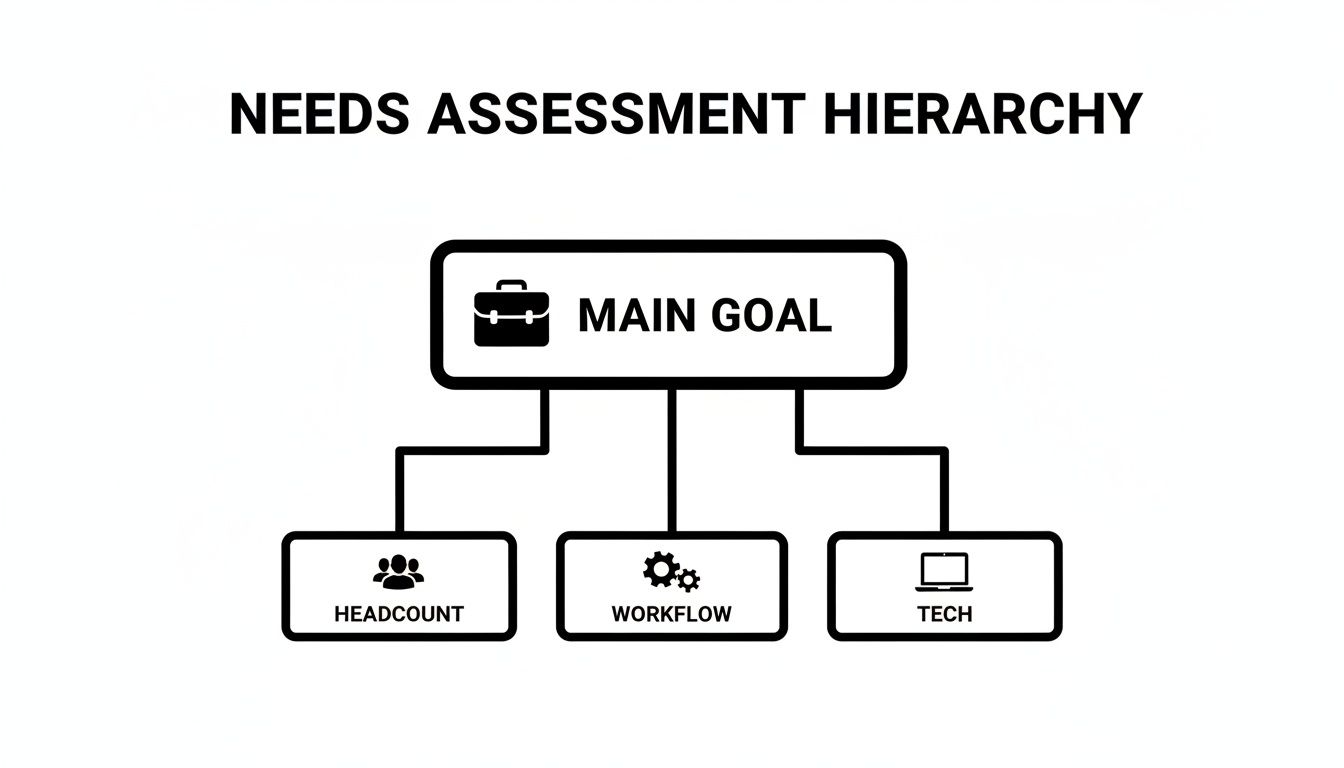
As you can see, every decision about workflow and technology should directly support your primary business goals while accommodating your projected headcount.
A well-crafted space program is your most powerful negotiating tool. It transforms your lease discussion from a vague conversation about size to a specific, data-backed request for exactly what your business needs to succeed.
This kind of detailed planning also lets you incorporate modern metrics that go way beyond simple occupancy. Today, office space utilization is a game-changer, with 89% of organizations calling it the most important metric for managing hybrid workplaces. This data, which shows how a space is actually used versus just being occupied, is a huge benefit for agile BPOs and startups looking at efficient seat leasing models.
In fact, 46% of companies are using these metrics to fine-tune their hybrid programs. You can dive deeper by reading the full report on office space utilization.
Ultimately, your space program becomes the foundational document for your architect, designer, and real estate broker. It’s the blueprint that guarantees the office you build is the office you actually need—perfectly aligned with your vision for the future.
Choosing an Office Layout That Works for You
With a solid space program in hand, you get to move on to the fun part: translating those numbers and needs into a physical layout. This is about more than just deciding where desks go. You're crafting an environment that should feel like a direct reflection of your company's culture and the way your teams actually work. The layout you pick will have a direct impact on everything from collaboration to individual focus.
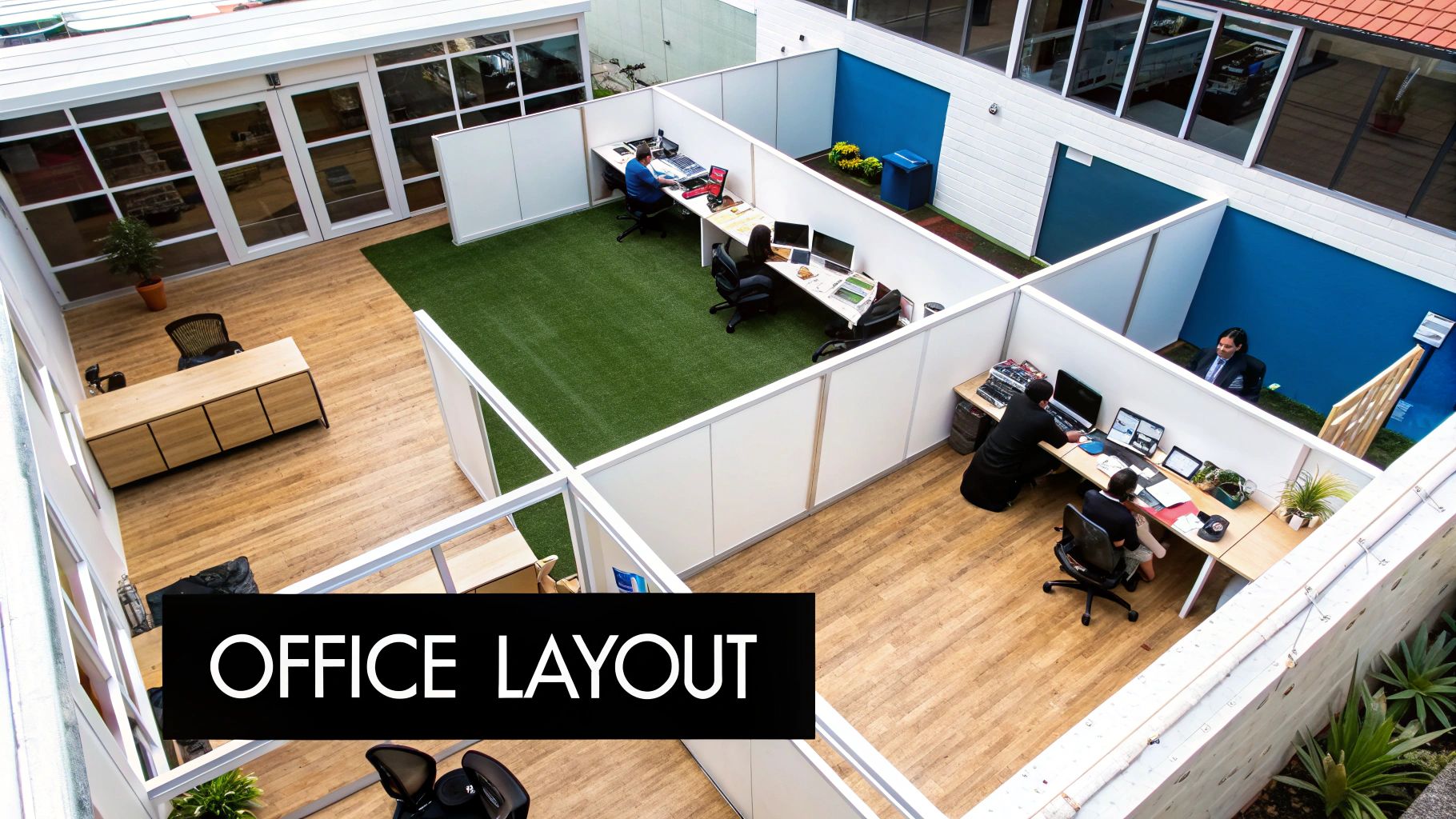
Let's be clear: there's no single "best" layout. What works for a bustling BPO call center would be a disaster for a software startup that needs quiet space for deep work. Let’s walk through the most common models to see which one feels right for you.
The Energetic Open Plan Layout
For years, the open-plan office has been the go-to for modern design. Think large, open rooms, rows of desks, and very few walls. This layout is built from the ground up to spark interaction, promote transparency, and create a real sense of shared purpose.
Its biggest selling point is how it encourages spontaneous collaboration. When you remove physical barriers, ideas flow more freely. In fact, some research suggests that open layouts can boost communication three times more often than old-school private offices. It creates a dynamic, accessible vibe.
Of course, there's a trade-off. The constant buzz can be a major source of noise and distraction. Without careful management, deep, focused work can become a real challenge.
The Flexible Hybrid Model
Because a purely open design has its limits, many companies are shifting to a hybrid or "activity-based" model. This approach is all about offering the best of both worlds by mixing open, collaborative zones with a variety of enclosed spaces built for different kinds of tasks.
The idea is to empower people to choose the environment that fits what they’re working on at that moment. It's a dynamic solution that understands not all work is the same.
You’ll typically find a mix of:
- Focus Pods: Small, soundproofed booths perfect for concentration or private calls.
- Huddle Rooms: Casual, small meeting spaces for quick team check-ins.
- Lounge Areas: Comfy, informal seating that encourages relaxed conversations.
- Quiet Zones: Designated areas where talking is off-limits, allowing for uninterrupted work.
This flexibility is a massive advantage when attracting and keeping talent. A recent survey found that 71% of workers want an office that actively supports their health and well-being. The hybrid model nails this by giving them control.
Beyond the Floor Plan: Well-Being Details
A great design is about so much more than just walls and desks. The small details are what turn a functional space into a healthy and productive one. If you ignore these elements, you risk undermining all your careful planning.
The most thoughtful office space planning considers the human element at every turn. It’s about creating an environment where people feel supported, comfortable, and empowered to do their best work, not just a place to house employees.
A well-designed workspace pays dividends. Studies have shown that improving a building’s indoor environmental quality can boost cognitive function by as much as 101%. That's a direct impact on performance and your bottom line.
Ergonomics and Smart Lighting
Bad ergonomics lead to discomfort, which quickly turns into distraction and absenteeism. Investing in high-quality, adjustable furniture isn't just a perk; it's a must.
- Adjustable Chairs: Look for proper lumbar support that can be customized for each person.
- Sit-Stand Desks: These encourage movement throughout the day and have proven health benefits.
- Monitor Arms: Allow employees to position screens at the right height and angle to prevent neck strain.
Lighting is just as important. Bad lighting is a recipe for eye strain, headaches, and fatigue. Maximize natural light wherever you can, and then layer in a smart lighting strategy with ambient, task, and accent lights. You might even consider systems that adjust brightness and color temperature during the day to mimic our natural circadian rhythms. For more ideas on creating productive workspaces, explore the articles on the Seat Leasing BPO blog.
Acoustics and Biophilic Design
In any shared office, especially open or hybrid ones, noise management is absolutely critical. Poor acoustics is one of the top complaints people have about their workplace.
Some effective solutions include:
- Sound-Absorbing Panels: Wall-mounted or hanging panels made of materials like felt or foam do a great job of soaking up ambient noise.
- Acoustic Dividers: Freestanding partitions that can be moved around to create temporary quiet zones are incredibly useful.
- White Noise Machines: These devices create a subtle, constant background sound that helps mask distracting conversations.
Finally, don't underestimate the power of nature. Bringing natural elements into the office—a practice known as biophilic design—has been shown to reduce stress and boost creativity. Even simple additions like indoor plants, natural materials like wood and stone, or nature-themed artwork can have a huge positive effect on your office's atmosphere. By blending these layout and wellness details, you'll create an office that doesn't just look great but actively helps your team succeed.
Integrating Technology for a Seamless Workspace
A modern office is much more than desks and chairs; it’s a living, breathing ecosystem powered by technology. Planning your IT infrastructure can't be an afterthought—it’s the foundational layer that dictates how your team works, stays secure, and remains productive. If you don't get this right from the start, you're setting yourself up for a workspace plagued by Wi-Fi dead zones, a rat's nest of cables, and serious security risks.
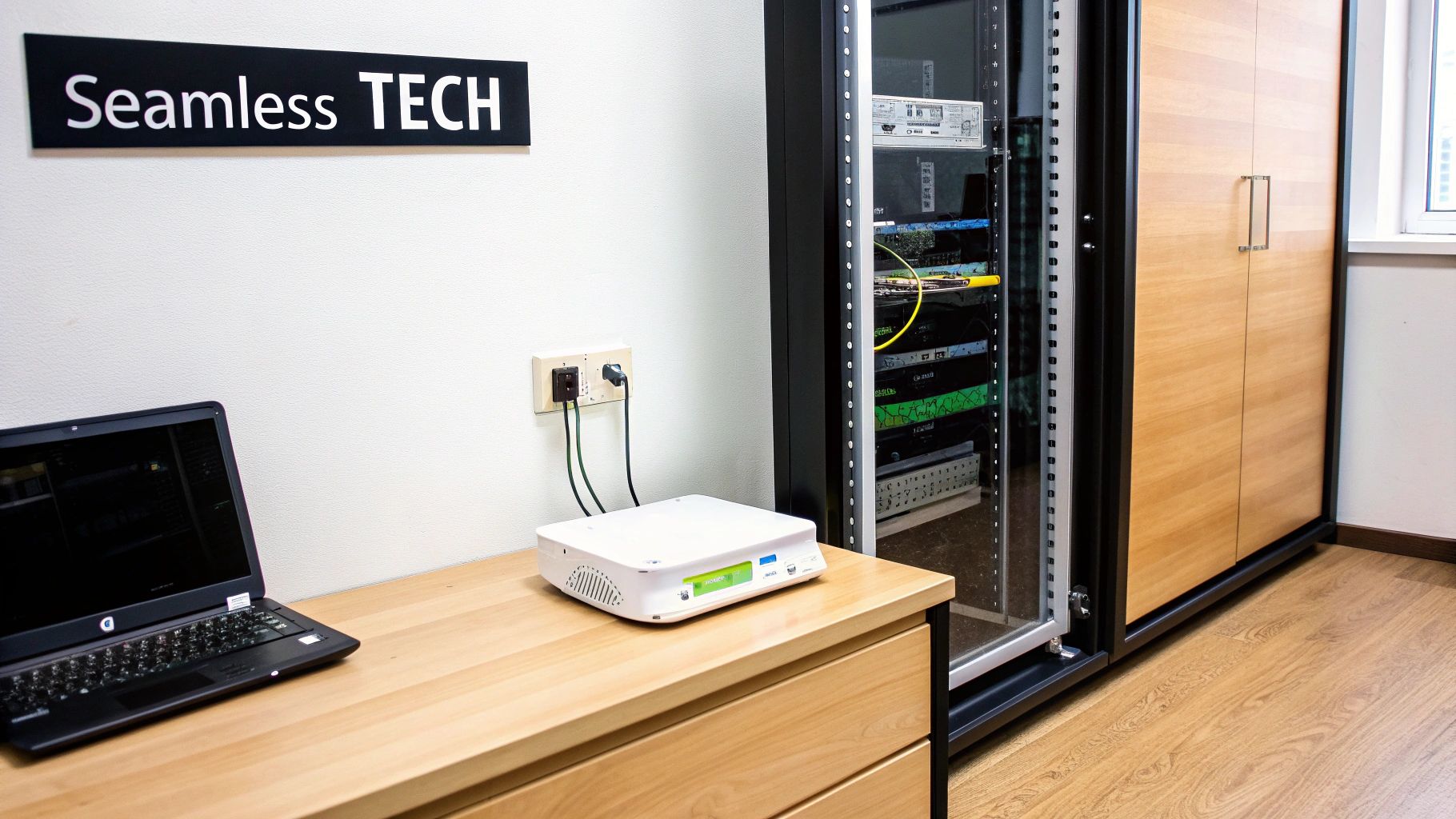
Think of your office's tech infrastructure as its central nervous system. Just like nerves need clear, protected pathways to function, your data cables, power lines, and Wi-Fi signals demand careful, strategic planning from day one. Taking this proactive approach is a cornerstone of any effective office space planning guide. It saves you from costly retrofitting down the road and guarantees your team can connect and get to work without a hitch.
Planning Your Connectivity Blueprint
Before you even think about where the first desk goes, you need to map out your office's digital and electrical backbone. This is about more than just having enough outlets. It's about putting them exactly where they need to be to support your layout and how your teams actually work. Poor tech integration is an incredibly common mistake that snowballs from minor daily frustrations into a massive loss of productive time for everyone.
A solid connectivity plan should cover:
- Strategic Power Distribution: Methodically map out power outlet locations for every single workstation, huddle room, and common area. For open-plan layouts, think about installing floor boxes to avoid turning your office into a trip-hazard maze of extension cords.
- Comprehensive Wi-Fi Coverage: Pinpoint the best spots for Wi-Fi access points to kill any dead zones and ensure a strong, reliable signal blankets the entire office.
- Structured Cabling: Plan the hidden routes for ethernet cables that will run to desks and conference rooms. A clean, well-organized cabling system isn't just for looks—it’s critical for safety and easy maintenance.
Getting this right ensures your physical space actually supports your digital operations instead of constantly fighting against them.
Building a Secure Digital Fortress
For any business handling sensitive information—think BPOs with client data or startups guarding their intellectual property—cybersecurity isn't just an IT problem. It's a business survival issue. And surprisingly, your physical office layout plays a huge role in keeping your digital assets safe.
Integrating cybersecurity into your physical space plan is like building a bank vault. You wouldn't just install a strong door; you'd reinforce the walls, install cameras, and control who has access. Your office network requires the same layered, physical-to-digital approach.
Start by locking down your core infrastructure. That means creating a dedicated, climate-controlled server room with restricted access. But it goes beyond that; you also have to think about the structure of your network itself.
Here are a few key security points to weave into your layout:
- Network Segmentation: Carve up your network into separate, firewalled zones for different teams or uses. Your guest Wi-Fi, for instance, should be completely walled off from your internal corporate network. No exceptions.
- Secure Access Points: Place physical ethernet ports in secure, monitored locations to stop anyone from plugging in unauthorized devices.
- Visual Privacy: Simple things matter. Arrange workstations and use privacy screens to prevent "shoulder surfing," where someone can casually glance over and see sensitive info on a screen.
The Plug-and-Play Advantage for Agile Businesses
For startups, BPOs, and other companies that need to move fast, the time and money needed to design and build out a complex IT infrastructure can be a massive hurdle. This is where flexible workspaces and seat leasing models really shine. These providers have already done all the heavy lifting on technology integration.
Instead of sinking months into planning and construction, you can move into a space that's already wired and ready to go. This 'plug-and-play' solution means your team can walk in, connect their devices, and be productive from the first hour. It not only saves a tremendous amount of time and money but also gives you access to enterprise-grade infrastructure that might otherwise be out of reach, freeing you up to focus on what you do best: running your business.
Your Final Move-In and Setup Checklist
You're in the home stretch now, but this final phase can feel like a mad dash to the finish line. Don't worry. With a bit of smart planning, you can turn a potentially chaotic move into a smooth, organized transition for your whole team. This checklist is your game plan for a stress-free move, making sure nothing falls through the cracks so your team can hit the ground running on day one.
Think of it this way: the weeks before your move are the final act of a carefully rehearsed play. Every vendor, team member, and piece of gear has a part to play. Your role is the director, making sure everyone and everything comes together for a flawless opening day.
Orchestrating a Smooth Move
The secret to a successful move is simple: start early and talk to everyone. Constantly. Don't leave booking movers to the last minute or forget to tell your team about the new office rules. A well-run move keeps business disruption to a minimum and actually builds some genuine excitement for the new space.
Here’s a practical timeline to keep you on track in those final weeks:
- Four Weeks Out: Lock in your moving company contract. While you're at it, create a detailed inventory of everything that’s coming with you. This is also the perfect time to nominate a "move captain" in each department to be the point person for their team's specific needs.
- Two Weeks Out: Start handing out packing materials and clear, simple instructions. Now is the time to begin sending out regular updates on the move-in schedule and other important details about the new office.
- One Week Out: Double- and triple-check that all utilities and internet services are scheduled to be live on move-in day. Make sure your most critical IT hardware—like servers and network switches—is packed with extreme care and flagged for priority setup.
Day One Success and Beyond
The first day in a new office really sets the tone for the future. You want it to be a day of productivity and positive energy, not a frustrating scavenger hunt for Wi-Fi passwords and working outlets. A thorough post-move walkthrough is non-negotiable; you have to catch small problems before they become big ones.
Be sure to check for:
- Connectivity: Is every workstation online? Do you have a strong Wi-Fi signal in every corner of the office?
- Functionality: Do all the access cards actually open the right doors? Are the printers and other shared equipment working and easy to find?
- Comfort: Is the air conditioning and heating working properly? Any obvious issues with lighting or wobbly desks?
A great way to boost morale is to create a 'Day One Welcome Kit.' Include a map of the new office layout, a simple schedule for the day, new access cards, and maybe some company swag. It’s a small touch, but it shows your team you’ve thought about their experience from the start.
Let’s be honest, this whole process is a heavy lift, especially if you're a growing business with a million other priorities. This is where a managed solution like seat leasing really shines. Instead of juggling movers, IT technicians, and utility companies yourself, it’s all handled for you. Your team literally walks in on day one to a fully operational workspace.
To see how this plug-and-play approach can remove the logistical headache for your business, you can get in touch with our team of experts for a quick consultation. It lets you skip the setup chaos and stay focused on what really matters—running your business.
Answering Your Top Office Space Planning Questions
Moving into a new office or overhauling your current one naturally brings up a lot of questions. Let's tackle some of the most common ones that business leaders ask, so you can move forward with confidence.
How Much Space Do I Really Need Per Employee?
There isn't a single magic number that fits every business, but a solid rule of thumb is to aim for 125 to 225 square feet per employee. That might sound like a lot for one person, but remember, this figure isn't just for their desk. It covers their share of all the common areas—hallways, meeting rooms, the kitchen, and breakout spaces.
Your actual number will really hinge on the kind of layout you choose. A high-density open plan will sit at the lower end of that range, while a setup with more private offices and generous common areas will push you toward the higher end.
What Is The Biggest Mistake In Office Space Planning?
Hands down, the most common and costly mistake is planning for the company you are today, not the one you'll be in three years. It's easy to get caught up in the immediate needs, but failing to account for future growth will leave you with a cramped, frustrating workspace. Before you know it, you're facing another expensive and disruptive move.
The key is to build flexibility right into your design from the start. Look at your growth projections and make sure the layout can evolve as your team gets bigger.
An effective office space planning guide always emphasizes future-proofing. Your layout should be an asset that supports growth, not a liability that restricts it. Building for scalability from day one saves immense time and capital down the road.
Open Plan Or Private Offices—Which Is Better?
Honestly, neither one is universally "better." The right choice comes down to your company's culture, the kind of work your teams do, and the atmosphere you want to create.
- Open-Plan Layouts: These are fantastic for sparking collaboration and building a strong sense of community. They're also more budget-friendly, but you have to be mindful of noise and distractions. Without good acoustic planning, they can become chaotic.
- Private Offices: These offer the quiet, focused environment people need for deep, concentrated work. The downside is they can sometimes lead to departmental silos and are definitely the more expensive option when you're paying by the square foot.
This is exactly why so many companies are landing on a hybrid model. They're mixing open-plan areas with enclosed pods, quiet zones, and dedicated meeting rooms to give their people the best of both worlds.
Ready to create a workspace that works for you without the operational headaches? Seat Leasing BPO offers plug-and-play office solutions that handle the planning, setup, and IT infrastructure, so you can focus on growth. Discover a smarter way to secure your office at https://seatleasingbpo.com.