The Philippines has solidified its position as the world's premier destination for customer support outsourcing, surpassing India in market share and setting the global standard for excellence in customer experience delivery. With over 1.5 million employees serving international clients and projected revenue growth continuing through 2026, call center services Philippines represents far more than a cost-saving measure. This Southeast Asian nation offers a unique combination of cultural affinity with Western markets, exceptional English proficiency, and a workforce trained in empathy-driven communication. For businesses exploring scalable support solutions, understanding the Philippine call center landscape is essential for making strategic decisions that impact customer satisfaction and operational efficiency.
The Philippine Call Center Industry Overview
The contact center sector in the Philippines generates approximately $26 billion in annual revenue and employs a workforce larger than many countries' entire labor markets. This industry expansion shows no signs of slowing, with the Philippine contact center industry targeting 5% revenue growth in 2026 despite global economic uncertainties.
What distinguishes call center services Philippines from competitors extends beyond pure economics. The country's colonial history with the United States created deep cultural connections that manifest in communication styles, entertainment preferences, and business practices. Filipino agents naturally understand American idioms, cultural references, and customer service expectations without extensive training.
Market Dynamics and Growth Drivers
Several factors propel the continuous expansion of Philippine call center capabilities:
- Government support through tax incentives and infrastructure development specifically targeting BPO growth
- Educational systems that prioritize English proficiency and communication skills from elementary levels
- Geographic advantages with multiple time zones covered and proximity to Asian markets
- Technological infrastructure including submarine cable systems delivering high-speed connectivity
- Real estate development creating purpose-built facilities in key business districts

The competitive landscape continues evolving as providers differentiate through specialization rather than competing solely on pricing. Companies now focus on vertical expertise, developing teams specifically trained in healthcare, fintech, e-commerce, or software support rather than offering generic customer service.
Service Categories and Capabilities
Call center services Philippines encompasses a comprehensive range of customer interaction and business process solutions. Understanding these categories helps businesses identify which services align with operational needs and growth strategies.
Inbound Customer Support Services
Inbound operations handle incoming customer inquiries across multiple channels. These services form the foundation of most outsourcing partnerships and include:
- Customer service hotlines managing product inquiries and account questions
- Technical support desks providing troubleshooting and resolution guidance
- Order processing and fulfillment coordination
- Billing inquiries and payment processing assistance
- Complaint resolution and escalation management
Technical support represents a particularly strong segment, with Filipino agents demonstrating patience and methodical problem-solving approaches that reduce customer frustration during complex issues. The strategic advantages of Philippine call center services include this natural aptitude for technical communication paired with genuine empathy.
Outbound Sales and Lead Generation
Outbound services drive revenue generation through proactive customer contact. Philippine agents excel in consultative selling approaches rather than aggressive cold-calling tactics:
- Appointment setting for sales teams requiring qualified prospect meetings
- Lead qualification through discovery calls assessing prospect fit
- Telemarketing campaigns introducing products to targeted audiences
- Customer retention programs reducing churn through proactive engagement
- Market research gathering customer feedback and competitive intelligence
- Upselling and cross-selling to existing customer bases
The cultural tendency toward relationship-building rather than transactional interactions makes Filipino outbound agents particularly effective for complex B2B sales cycles requiring multiple touchpoints.
Omnichannel Support Operations
Modern customers expect seamless support across email, chat, social media, and voice channels. Call center services Philippines have evolved to deliver integrated omnichannel experiences where customer context follows across platforms.
| Channel | Response Time Expectation | Philippine Provider Capability |
|---|---|---|
| Voice | Immediate | 24/7 coverage with minimal wait times |
| 24 hours | Same-day response with detailed resolution | |
| Live Chat | Under 2 minutes | Concurrent handling of 3-4 conversations |
| Social Media | Under 4 hours | Dedicated monitoring and brand voice consistency |
| SMS/Messaging | Under 1 hour | Integrated platforms with conversation history |
This omnichannel maturity allows businesses to meet customers on preferred platforms while maintaining consistent service quality and complete interaction histories.
Cost Structures and Financial Considerations
Financial advantages drive initial interest in Philippine outsourcing, but sustainable partnerships require understanding total cost of ownership beyond hourly agent rates. Call center services Philippines typically operate under several pricing models tailored to different business requirements and risk tolerance levels.
Per-Seat Pricing Models
The per-seat approach charges fixed monthly rates for dedicated workstations and agents. This model provides predictable costs and dedicated resources working exclusively on your account. Monthly rates typically range from $1,200 to $2,000 per seat depending on service complexity, required hours, and technology requirements.
For businesses requiring dedicated infrastructure without building their own facility, options like call center for rent solutions provide ready-to-use workspaces with enterprise-grade equipment and secure environments designed for immediate productivity.
Per-Hour and FTE Pricing
Hourly billing offers flexibility for variable volume operations, charging between $8 to $18 per productive hour based on service type and skill requirements. Full-time equivalent (FTE) pricing bundles services into monthly packages assuming 160 productive hours monthly, with rates spanning $1,500 to $3,500 per FTE.
Cost comparison across service types:
- Basic customer service: $8-12 per hour
- Technical support: $12-18 per hour
- Sales and lead generation: $10-15 per hour
- Specialized services (healthcare, legal): $15-22 per hour
Hidden Costs and Budget Planning
Beyond direct labor costs, businesses should budget for several additional expenses when establishing call center services Philippines partnerships:
- Training and onboarding programs specific to your products and processes
- Technology integration connecting your CRM, helpdesk, or telephony systems
- Quality assurance programs including monitoring, coaching, and performance management
- Account management providing oversight and continuous improvement initiatives
- Knowledge base development creating documentation and reference materials
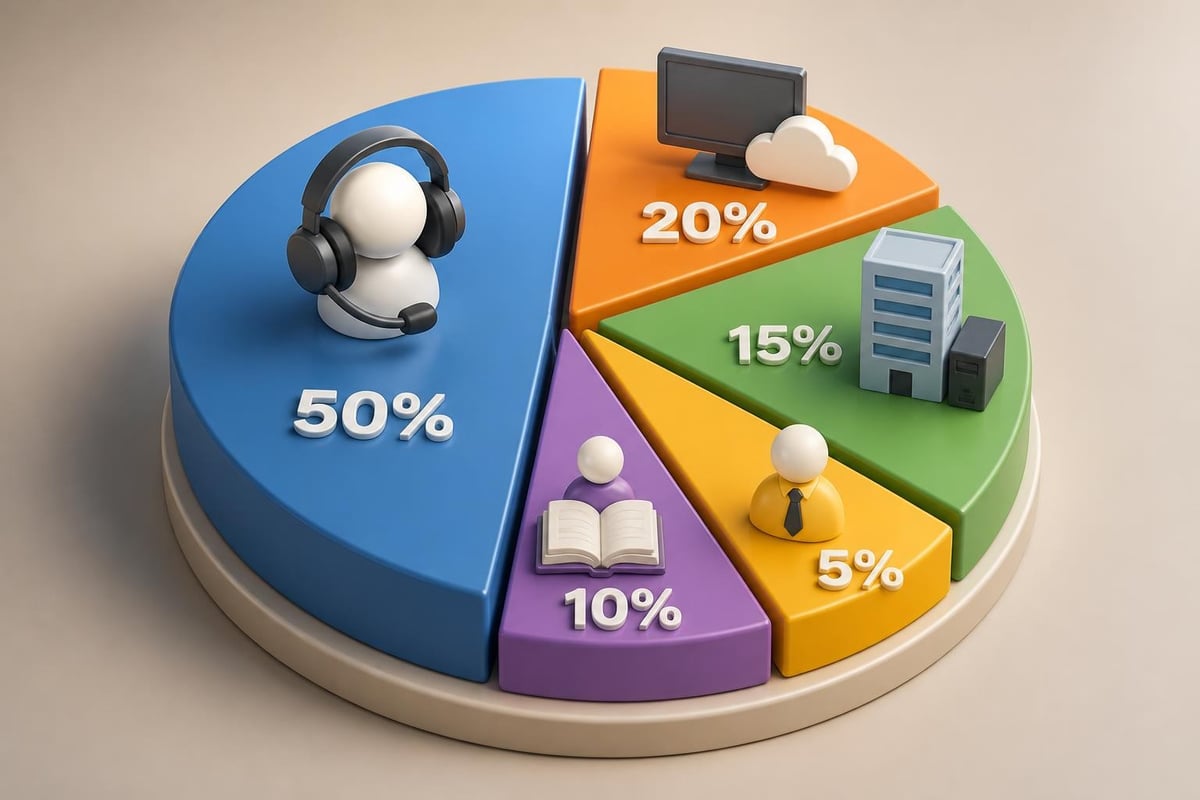
Transparent providers detail these costs upfront, while less scrupulous operators quote artificially low rates then add fees throughout the partnership. The comprehensive overview of call center services costs helps businesses benchmark quotes against industry standards.
Technology Integration and Digital Transformation
The Philippine call center industry has embraced technological advancement as a competitive differentiator rather than viewing automation as a threat. Leading providers invest heavily in platforms that augment human capabilities rather than replace agents entirely.
Cloud-Based Contact Center Platforms
Modern Philippine operations deploy cloud platforms offering flexibility, scalability, and advanced features impossible with traditional on-premise systems. These platforms enable:
- Instant scalability adding or reducing capacity within hours rather than months
- Disaster recovery with redundant systems ensuring business continuity
- Remote work capabilities expanding talent pools beyond traditional office locations
- Real-time analytics providing immediate visibility into performance metrics
- Seamless integrations connecting telephony with CRM, ticketing, and business intelligence tools
For businesses leveraging cloud infrastructure, custom integrations developed by specialized teams like Brytend ensure call center platforms connect seamlessly with proprietary business systems and workflows.
Artificial Intelligence and Automation
The GenAI revolution in Philippine call centers demonstrates how the industry embraces rather than resists technological change. AI applications augment agent productivity through:
- Intelligent routing directing customers to the most qualified agents based on inquiry analysis
- Real-time assistance providing agents with suggested responses and knowledge base articles during conversations
- Sentiment analysis flagging frustrated customers for priority handling or supervisor intervention
- Automated quality assurance reviewing 100% of interactions rather than small samples
- Predictive analytics identifying customers likely to churn or upgrade
These technologies don't eliminate jobs but instead handle routine inquiries while freeing human agents for complex problem-solving requiring empathy, creativity, and judgment.
Data Security and Compliance
Philippine call centers maintain rigorous security standards satisfying even highly regulated industries. Certifications commonly held include:
| Certification | Focus Area | Significance |
|---|---|---|
| ISO 27001 | Information security management | International standard for protecting sensitive data |
| PCI DSS | Payment card industry compliance | Required for handling credit card information |
| HIPAA | Healthcare data privacy | Essential for medical and health insurance support |
| SOC 2 Type II | Service organization controls | Third-party validation of security controls |
| GDPR | European data protection | Compliance with EU privacy regulations |
Operations handling sensitive data implement additional measures including encrypted communications, biometric access controls, and network monitoring. For businesses requiring enhanced security infrastructure, providers offering purpose-built facilities ensure physical and digital security meets enterprise standards.
Strategic Implementation and Vendor Selection
Successfully leveraging call center services Philippines requires thoughtful planning beyond simply selecting the lowest-cost provider. Strategic implementations align vendor capabilities with business objectives while establishing frameworks for continuous improvement.
Defining Requirements and Success Metrics
Clear requirements documentation prevents misaligned expectations and establishes accountability. Comprehensive specifications should address:
- Service level agreements defining response times, resolution rates, and quality thresholds
- Volume projections including seasonal variations and growth trajectories
- Technology requirements specifying platforms, integrations, and reporting needs
- Compliance obligations detailing regulatory requirements and data handling protocols
- Escalation procedures establishing processes for urgent issues and edge cases
Success metrics must extend beyond efficiency measures like average handle time to include customer-centric indicators such as satisfaction scores, first-contact resolution, and customer effort scores.
Vendor Evaluation Framework
The strategic implementation guide for Philippine call center services recommends multi-dimensional evaluation criteria rather than focusing exclusively on cost comparisons.
Critical evaluation dimensions:
- Industry experience with companies in your sector facing similar challenges
- Technology stack matching your current systems or offering superior alternatives
- Financial stability ensuring the vendor can sustain long-term partnerships
- Talent development programs demonstrating investment in agent skills and career growth
- Cultural fit aligning with your company values and customer service philosophy
- Scalability supporting your growth ambitions without quality degradation
Site visits, whether physical or virtual, reveal operational realities beyond marketing presentations. Observing live operations, interviewing agents, and reviewing actual quality monitoring sessions provide insights impossible to gain through proposals alone.
Transition Planning and Change Management
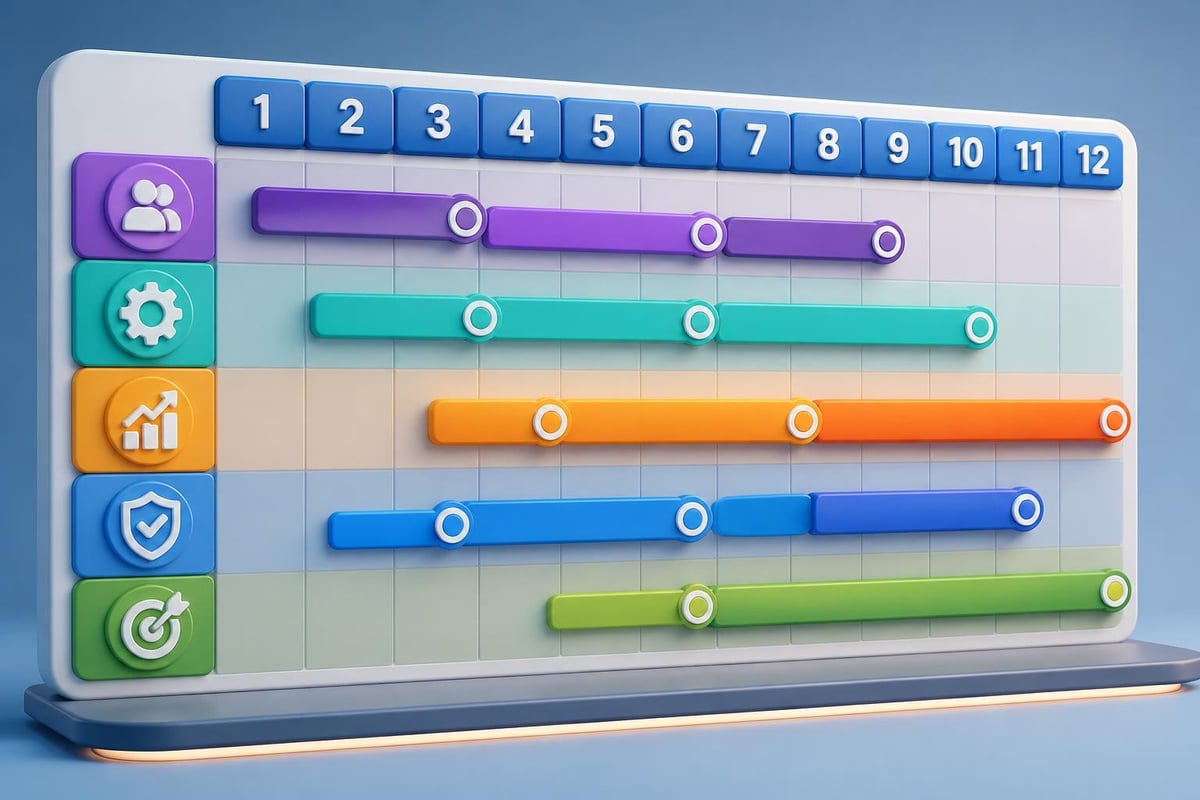
Successful implementations follow structured transition plans minimizing disruption while building foundations for long-term success. A typical 90-day launch timeline includes:
- Weeks 1-2: Infrastructure setup, system access provisioning, and documentation review
- Weeks 3-4: Intensive product and process training with knowledge assessments
- Weeks 5-6: Side-by-side operation with existing team while Philippine agents handle non-critical inquiries
- Weeks 7-8: Gradual volume ramp increasing Philippine team responsibility
- Weeks 9-12: Full transition with continuous monitoring and optimization
Change management extends beyond the offshore team to include internal stakeholders adjusting to new workflows, handoff procedures, and collaboration models.
Workforce Quality and Cultural Advantages
The human element differentiates call center services Philippines from lower-cost alternatives in other markets. While technology and infrastructure can be replicated, the unique workforce characteristics creating exceptional customer experiences remain difficult to duplicate.
English Proficiency and Neutral Accents
The Philippines ranks among the world's largest English-speaking nations with over 90% of the population demonstrating conversational fluency. English serves as a medium of instruction throughout educational systems, creating professionals comfortable with business communication from early development.
Filipino accents present minimal comprehension challenges for American, British, and Australian customers compared to alternatives. Accent neutralization training further refines pronunciation, though most agents naturally adopt clear, easily understood speech patterns through media exposure and education.
Cultural Affinity and Customer Service Orientation
Filipino culture emphasizes hospitality, respect, and harmony in social interactions. These values translate naturally into customer service contexts where agents prioritize relationship-building over transactional efficiency. The cultural concept of "pakikisama" (getting along with others) manifests in genuine patience during difficult interactions and creative problem-solving to preserve customer relationships.
This cultural orientation explains why Philippine call centers set the global customer experience standard, with satisfaction scores consistently exceeding those of onshore and other offshore alternatives.
Talent Pool Depth and Education Standards
The Philippines produces approximately 700,000 college graduates annually, creating deep talent pools even as the industry employs over 1.5 million workers. Competition for positions remains intense, allowing providers to maintain selective hiring standards.
Educational attainment among call center agents significantly exceeds requirements, with many holding bachelor's degrees and working in customer support as career positions rather than temporary employment. This creates stable, experienced teams reducing the training investment waste associated with high turnover markets.
Industry Challenges and Future Outlook
Despite dominant market position, call center services Philippines faces ongoing challenges requiring adaptation and innovation. Understanding these dynamics helps businesses set realistic expectations and identify forward-thinking partners positioned for long-term success.
Wage Inflation and Competition
As demand continues exceeding supply in key metro areas, wage pressures threaten the cost advantages historically driving Philippine outsourcing growth. Annual salary increases of 5-8% compress margins and force providers to demonstrate value beyond pure cost arbitrage.
Progressive providers respond by expanding to secondary cities offering lower operating costs while maintaining talent quality. Locations like Iloilo, Bacolod, and Baguio provide educated workforces at 15-20% lower costs than Metro Manila while offering improved quality of life reducing agent turnover.
Automation Impact and Role Evolution
Concerns about market oversaturation and AI displacement overlook the industry's consistent ability to evolve with technological change. Rather than eliminating positions, automation shifts agents toward higher-value activities requiring uniquely human capabilities.
The future call center agent serves as a customer experience specialist handling complex situations after AI addresses routine inquiries. This evolution requires continuous upskilling, with leading providers investing heavily in training programs developing critical thinking, emotional intelligence, and technical expertise.
Infrastructure Development and Connectivity
While major cities offer world-class infrastructure, expanding to secondary locations requires ongoing investment in reliable power, internet connectivity, and transportation networks. Providers partnering with infrastructure specialists offering enterprise-grade connectivity ensure consistent service quality regardless of location.
Government infrastructure programs including subway systems in Metro Manila and high-speed internet expansion to provincial areas gradually address these challenges, opening new geographies for industry growth.
Regulatory Environment and Labor Relations
The Philippine government balances supporting BPO growth with protecting worker rights and ensuring fair labor practices. Recent legislative discussions around security of tenure and benefits for contractual workers create uncertainty around operating models and cost structures.
Responsible providers view these developments as opportunities to differentiate through superior employment practices rather than threats to profitability. Companies offering career development, comprehensive benefits, and positive work environments attract superior talent and achieve lower attrition regardless of regulatory requirements.
Maximizing Partnership Value
Extracting maximum value from call center services Philippines partnerships requires active engagement rather than passive vendor management. Businesses achieving the greatest success treat offshore teams as extensions of their organization rather than separate entities.
Communication and Collaboration Frameworks
Regular, structured communication prevents issues from escalating while building relationships that improve service delivery. Effective frameworks include:
- Daily operational calls reviewing prior day performance and addressing immediate concerns
- Weekly business reviews analyzing trends, celebrating successes, and addressing improvement opportunities
- Monthly strategic sessions discussing upcoming initiatives, process enhancements, and capability development
- Quarterly executive reviews aligning partnership direction with evolving business objectives
Time zone differences require accommodation from both parties, with alternating meeting schedules distributing inconvenience fairly across teams.
Continuous Improvement Methodologies
Leading partnerships implement formal continuous improvement processes ensuring service quality advances rather than stagnates. Methodologies include:
- Root cause analysis investigating recurring issues to address underlying causes rather than symptoms
- Process mapping identifying inefficiencies and optimization opportunities in current workflows
- A/B testing comparing alternative approaches to determine superior methods
- Knowledge management systematically capturing and sharing solutions to common problems
- Innovation programs encouraging frontline agents to propose improvements based on customer interactions
Knowledge Sharing and Cross-Training
Information asymmetry between onshore and offshore teams creates quality gaps and frustration on both sides. Systematic knowledge sharing ensures Philippine agents access the same information, context, and decision-making frameworks as internal teams.
Cross-training programs where Philippine supervisors visit headquarters and internal team members spend time in offshore facilities build empathy, relationships, and shared understanding that improve collaboration and reduce us-versus-them mentalities.
Selecting Services Aligned with Business Needs
Not all call center services Philippines offerings suit every business situation. Matching service models to organizational maturity, budget constraints, and strategic objectives ensures realistic expectations and successful outcomes.
Startup and Small Business Considerations
Companies in early growth stages benefit from flexible arrangements minimizing fixed commitments while establishing scalable foundations. Shared services models where agents support multiple clients offer lower entry costs while providing professional customer support impossible to achieve with limited internal resources.
Starting with limited scope addressing specific pain points (after-hours coverage, overflow support) allows organizations to validate offshore effectiveness before expanding into broader operations.
Mid-Market Growth Strategies
Established businesses experiencing rapid growth find dedicated teams providing consistency and brand familiarity justify higher per-seat costs. These arrangements support customization matching specific processes, terminology, and service philosophies while building institutional knowledge within the offshore team.
Mid-market companies also benefit from exploring seat leasing arrangements where they maintain direct employment relationships with agents working in provider facilities offering infrastructure and support services. This hybrid approach combines dedicated teams with operational expertise from experienced BPO providers.
Enterprise Requirements and Complexity
Large organizations with complex products, multiple business units, and sophisticated technology environments require providers demonstrating enterprise-grade capabilities. Evaluation criteria expand beyond basic service delivery to include change management processes, business continuity planning, and ability to support global operations across multiple time zones.
Enterprise partnerships often involve multi-shore strategies combining Philippine operations with other locations creating follow-the-sun coverage and geographic risk distribution.
The dominance of call center services Philippines in the global customer support landscape reflects genuine competitive advantages in talent quality, cultural alignment, and technological sophistication rather than temporary cost arbitrage. As the industry continues evolving through AI integration and expanding capabilities, businesses partnering with Philippine providers gain access to world-class customer experience delivery at sustainable costs. Whether you need dedicated teams, flexible capacity, or complete contact center operations, Seat Leasing BPO provides secure, scalable workspace solutions with enterprise-grade infrastructure designed for immediate productivity and long-term operational excellence in the heart of the Philippine BPO industry.