The currency used in the Philippines is the Philippine Peso, with the symbol ₱ and the currency code PHP. If you're setting up operations there, you’ll be dealing in PHP for payroll, everyday vendor payments, and most local operating costs.
That matters more than most first-time entrants expect. You might be finalizing a seat leasing agreement, costing out a hiring plan, or comparing whether to fund local expenses from a USD account or convert in stages. In each case, the currency decision affects cash flow discipline, admin workload, and your exposure to exchange-rate swings.
Most guides on what currency is used in philippines are written for travelers. They focus on what bills to carry, where to exchange cash at the airport, and whether cards work in malls. That’s not the problem a business has to solve.
A business needs a cleaner operating model. You need to know what denominations circulate, who issues the currency, how exchange-rate movement affects imported tech and local salaries, when cash still matters, and when digital rails like GCash, Maya, and QRPH are the better choice. If you want a broader operating view of the market, the Seat Leasing BPO blog is a useful starting point for practical expansion topics beyond currency alone.
Your First Step into the Philippine Market
When a company enters the Philippines, the first financial mistake usually isn’t major. It’s a stack of small process errors. Finance teams delay payroll setup because they assume foreign transfers will be enough. Procurement treats local vendors like cross-border vendors. Operations underestimates how often routine payments still need local settlement discipline.
The practical answer starts with one rule. Budget in PHP for local obligations, even if your revenue is in USD or another foreign currency. That gives you a realistic view of salary runs, petty cash, utilities, office support, and local supplier invoices.
What a new entrant needs to lock down early
Three decisions should happen before your first hire starts work:
- Choose your base operating currency: Local expenses should be planned in Philippine Peso (PHP), not mentally back-converted from another currency every time.
- Define who converts funds and when: A finance owner should decide whether to convert on a schedule or per payment batch.
- Separate strategic forex decisions from daily payments: Treasury should handle exchange timing. Local ops should handle disbursement execution.
Practical rule: Don’t let your HR team discover your currency process on the week of payroll.
That applies whether you’re a startup hiring a first support team or an established BPO provider adding new seats. The Philippines is attractive because it supports cost-efficient operations, but those savings only show up cleanly when currency handling is planned, not improvised.
Why this question matters for BPO and seat leasing setups
In a seat leasing environment, currency management touches more than payroll. It affects recurring vendor settlements, imported equipment exposure, reimbursement controls, and the speed of office activation. A company that understands local payment mechanics usually ramps faster and spends less time resolving avoidable finance friction.
The Philippine Peso A Closer Look
The Philippine Peso is the country’s official currency. Its code is PHP, its symbol is ₱, and it’s issued exclusively by the Bangko Sentral ng Pilipinas (BSP). For an operator, that gives you one central authority to watch for currency issuance, policy direction, and payment-system standards.
The peso is divided into 100 centavos. In practice, though, most business handling happens in peso notes and higher-value coins, not in small coin-heavy workflows.
Denominations you’ll actually encounter
According to this overview of currency in the Philippines, circulating banknotes are ₱20, ₱50, ₱100, ₱200, ₱500, and ₱1,000, while circulating coins include 1, 5, 10, and 25 centavos, plus ₱1, ₱5, ₱10, and ₱20. The same source notes that ₱20 to ₱100 notes handle about 70% of micro-transactions, which is one reason they matter in environments with frequent small purchases and reimbursements.
| Denomination | Type | Common Usage |
|---|---|---|
| 1 centavo | Coin | Very small cash change, rarely important for business operations |
| 5 centavos | Coin | Small change in cash transactions |
| 10 centavos | Coin | Small change, limited operational importance |
| 25 centavos | Coin | Common coin for exact change |
| ₱1 | Coin | Everyday low-value cash payments |
| ₱5 | Coin | Snacks, courier tips, minor cash purchases |
| ₱10 | Coin | Small transport or convenience purchases |
| ₱20 | Coin | Useful for quick low-value payments |
| ₱20 | Banknote | Small daily cash expenses |
| ₱50 | Banknote | Petty cash and reimbursement use |
| ₱100 | Banknote | Frequent office and field spending |
| ₱200 | Banknote | Mid-range cash disbursements |
| ₱500 | Banknote | Larger routine purchases and cash advances |
| ₱1,000 | Banknote | High-value cash handling, controlled disbursement |
What works operationally
If your office keeps petty cash, stock enough ₱20, ₱50, and ₱100 notes. Those are the denominations that reduce delays when staff reimburse transport, buy supplies, or settle small same-day expenses.
What doesn’t work is funding petty cash with mostly large notes and expecting smooth reconciliation. That creates two problems fast: change-making friction and poor tracking discipline.
Keep cash for exceptions, not for your whole operating model.
Why the BSP matters to businesses
The BSP isn’t just relevant to banks. If you’re entering the market, it’s the institution behind currency issuance and the broader monetary framework that shapes how stable local settlement feels over time. For businesses, that means one thing. Local payment execution gets easier when your systems align with the currency structure already in common use.
Exchange Rates and Getting Local Currency
The peso doesn’t sit at a fixed rate. It operates on a managed float, which means the value moves, but within a policy environment shaped by the BSP. For a business funded in USD, that’s similar to buying from a supplier whose pricing shifts over time, but not in a completely uncontrolled way.
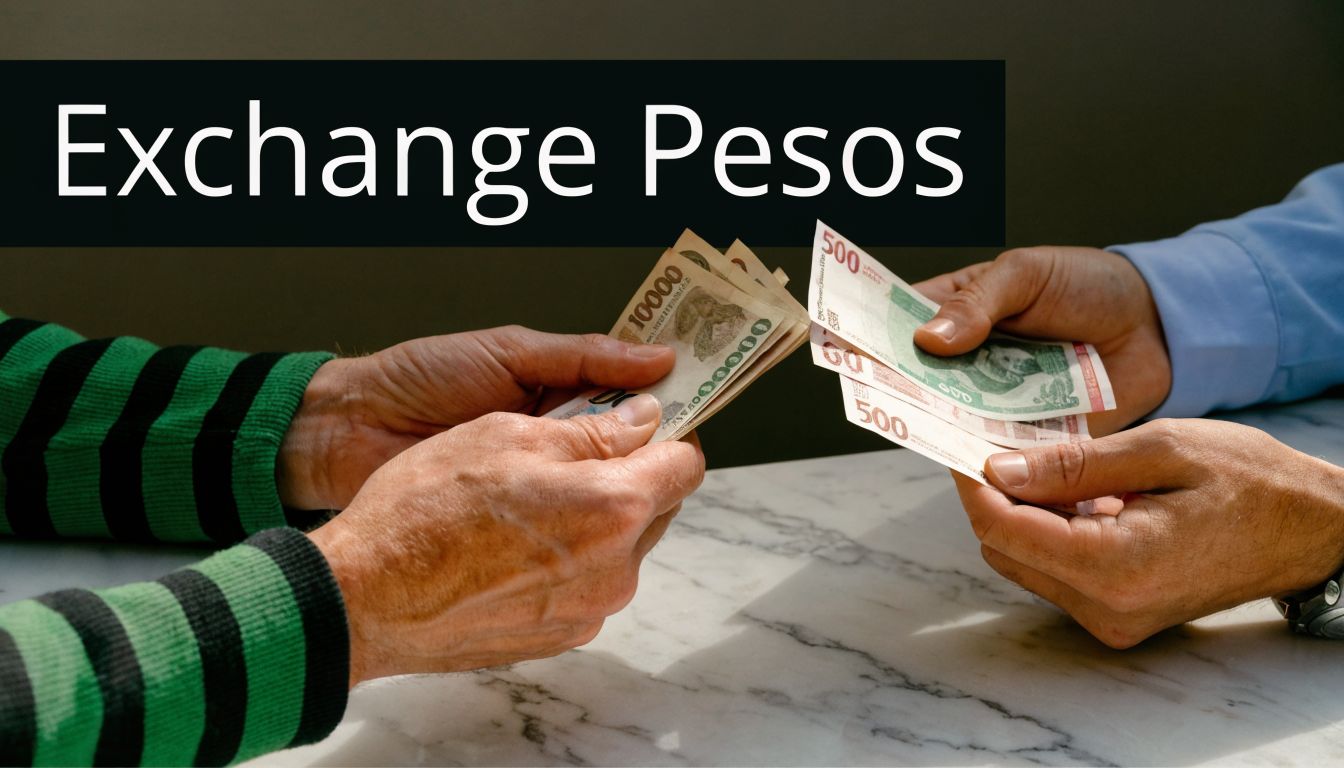
A concise Philippine peso reference notes that the currency was historically pegged at 2:1 to the USD, later transitioned to a managed float after 1949, and has had recent benchmarks of about 1 USD ≈ 58 to 62 PHP. For a company importing equipment or funding local operations from offshore accounts, that movement changes your true landing cost.
Where businesses should convert funds
For operating capital, the safest default is simple:
- Use official banks for larger, traceable conversions tied to payroll and vendor batches.
- Use authorized money changers only when there’s a legitimate operational reason for smaller local-currency needs.
- Avoid airport kiosks and hotels for business funding. They’re convenient, not efficient.
- Don’t let employees solve treasury problems individually through ad hoc exchange behavior.
Teams that need a better process for understanding live exchange rates should track timing before a payroll run or major equipment purchase, not after funds are already committed.
A simple working approach
If your revenue is in USD and your expenses are in PHP, convert according to obligation windows. Payroll and lease-related payments are predictable. Emergency conversions are not.
That discipline matters most when you’re buying imported hardware, networking gear, or software-linked infrastructure. Those purchases create forex exposure quickly, while routine local spending is easier to forecast.
For a short visual explainer, this walkthrough is a useful supplement:
Managing Payroll and Vendor Payments in PHP
Payroll is where currency theory turns into operating reality. In the Philippines, local wages need local handling discipline. You can fund from abroad, but the actual disbursement model has to work in PHP, not as a chain of last-minute conversions.
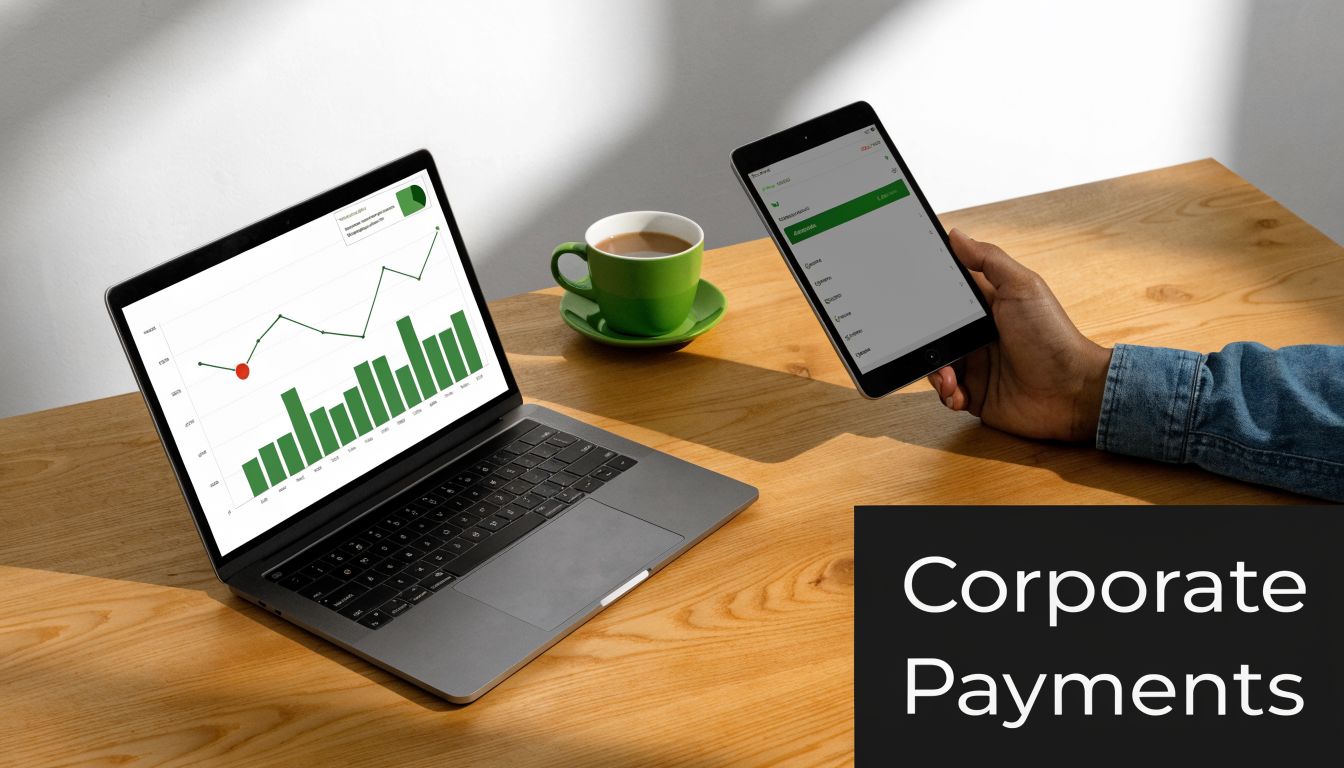
A practical PHP conversion reference for businesses notes that BPO salary payments commonly average ₱20,000 to ₱30,000 monthly, and that peso depreciation can raise remittance costs for firms managing the Philippines’ $30B+ in annual BPO-related inflows. The same source points to BSP-authorized digital wallets like GCash as an underused hedge and disbursement tool in some workflows.
Payroll setup that usually works
A stable payroll operation tends to use one of these structures:
Local bank payroll accounts
Best for formal recurring runs and cleaner audit trails. This is usually the strongest option once headcount is established.Digital wallet-assisted disbursement
Useful when parts of the workforce need flexibility or when you’re smoothing smaller recurring payouts. It can help reduce friction, especially in distributed teams.Hybrid payroll model
Common when a business combines core staff on bank rails with selected allowances or reimbursements paid digitally.
What doesn’t scale is manual person-by-person payment handling. It creates approval gaps, inconsistent records, and unnecessary exchange timing risk.
Vendor payments need a separate policy
Many businesses lump vendor settlement into the same logic as payroll. That’s a mistake. Local vendor payments include utilities, supplies, maintenance, connectivity, local service providers, and urgent replacement purchases. They don’t all need the same payment rail.
Use a tiered approach:
- Recurring high-visibility vendors: Pay through bank transfer with scheduled approvals.
- Fast local suppliers: Keep digital payment options available.
- Petty cash vendors: Restrict this lane tightly and require immediate documentation.
If you’re redesigning approvals and invoice flow, resources on streamlining your procurement process can help finance teams separate purchasing control from actual payment execution.
Forex risk doesn’t disappear on payday
If your top line is in USD and your salary obligation is in PHP, your payroll cost changes in home-currency terms as exchange rates move. That doesn’t always hurt you, but it does create planning noise.
The fix isn’t to predict the market perfectly. The fix is to shorten the distance between funding decisions and payment obligations.
That means batching conversions around known due dates, avoiding random treasury timing, and keeping visibility on major local obligations. For businesses evaluating what comes bundled into managed workspace support, the standard inclusions in a seat leasing setup also matter because bundled PHP-denominated costs are easier to forecast than a long tail of separate local invoices.
Cash vs Digital The Modern Payment Landscape
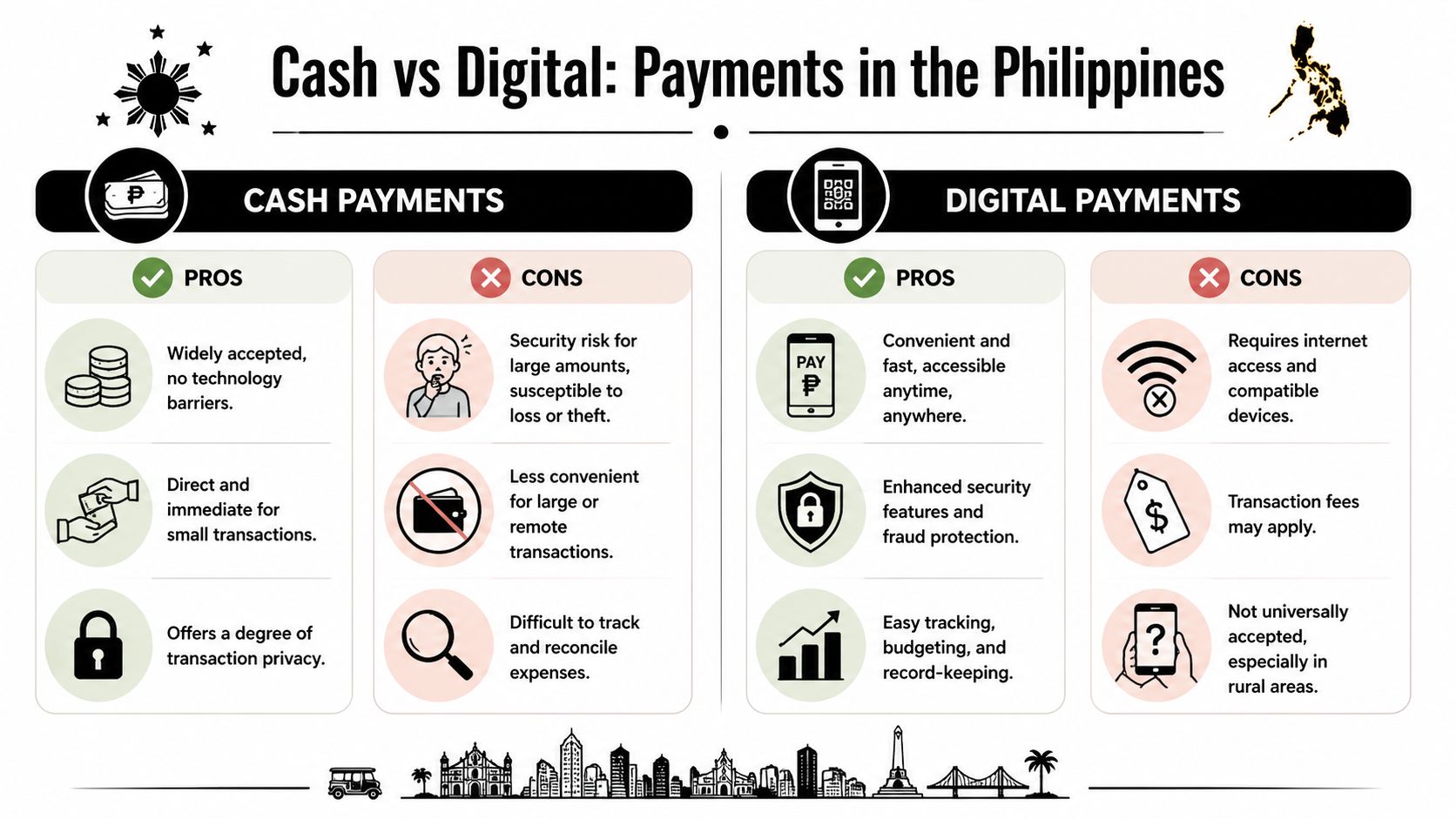
Cash still matters in the Philippines, but digital payment rails now carry much more of the day-to-day business load than many foreign entrants expect. The smart move isn’t choosing one side. It’s assigning each method to the right use case.
The most useful shift for operators is this: stop asking whether the market is cash or digital. Ask which payments must be immediate, which must be traceable, and which must stay flexible.
Where digital is strongest
According to Wise’s Philippine currency guide, e-wallets like Maya and GCash dominate 70% of transactions for freelancers and small businesses in BPOs. The same source says 60% of plug-and-play workspaces in Cebu and Manila integrate QRPH, and that this setup can reduce forex fees by 3% to 5%.
That makes digital especially strong for:
- Small recurring office payments: Faster than issuing cash and easier to reconcile.
- Distributed team reimbursements: Better visibility than manual cash logs.
- Time-sensitive local settlements: QRPH and wallet-based transfers can reduce waiting.
Where cash still earns its place
Cash remains useful when acceptance is uncertain, when a low-value transaction needs to close immediately, or when a field team can’t rely on the other party having the right digital setup. It’s also practical as a contingency tool during outages or access issues.
Use cash carefully:
- Set a petty cash ceiling: Keep it for edge cases, not standard process.
- Require same-day recording: Delayed logging is how small losses become recurring losses.
- Assign one custodian: Shared cash ownership leads to weak controls.
Digital is better for records. Cash is better for exceptions. Confusing those roles creates avoidable admin work.
A note on emerging payment conversations
Some companies ask whether crypto belongs in their Philippine payment stack. For most local operating expenses, the immediate concern is still settlement reliability in PHP. That said, broader trends in cross-border settlement are worth watching, and inabit's crypto payment insights are useful if your finance team is comparing future options against current local payment rails.
Currency Implications for Seat Leasing BPO Clients
Currency knowledge becomes more valuable when it changes the economics of your operating model. That’s exactly what happens in seat leasing. The company paying in foreign currency may see one budget line, but actual efficiency comes from how many local PHP-denominated obligations are simplified underneath it.
A Philippine peso history guide notes that the peso’s modern form was solidified from 1903 to 1946, when it was pegged at 2:1 to the US dollar, and that this longer history of stability now managed by the BSP supports reliable long-term planning. The same source connects that foundation to cost-effective BPO operations and notes that seat leasing arrangements can achieve up to 80% savings.
Why this matters in practice
For a BPO client, the main advantage isn’t just lower rent. It’s lower operational fragmentation. Instead of managing a long list of local-currency expenses separately, the client can work with a more consolidated structure.
That changes several things:
- Fewer payment points: Less admin around utilities, connectivity, and local support items.
- Cleaner forecasting: More predictable monthly obligations in PHP terms.
- Less procurement noise: Fewer one-off local vendor relationships to maintain.
The forex angle most clients miss
If your business is funded in USD and your operating obligation is largely in PHP, currency movement can improve cost position in some periods and tighten it in others. What matters is that seat leasing reduces the number of separate PHP exposures you need to manage directly.
That’s why the model suits companies entering the Philippines quickly. They don’t need to build an entire local payments architecture from scratch before they can operate. For teams comparing locations and operational fit, the Building 24 workspace option gives useful context on how location choices tie into setup efficiency.
A good seat leasing arrangement doesn’t remove currency risk entirely. It removes a large amount of unnecessary payment complexity around it.
Your Next Financial Steps in the Philippines
If you came here asking what currency is used in philippines, the practical answer is straightforward. The country uses the Philippine Peso (PHP), marked with the ₱ symbol, and your business should treat PHP as the working currency for local payroll, supplier settlement, and most day-to-day operating expenses.
The stronger move is to build a payment system around that fact early. Convert funds through official channels. Run payroll in PHP with a repeatable process. Use digital rails for speed and record-keeping, while keeping cash for controlled exceptions. Watch exchange rates when timing major funding decisions, especially if your revenue comes from outside the Philippines.
Companies that do this well usually avoid the same traps. They don’t overuse cash, they don’t leave conversion timing to the last minute, and they don’t let dozens of small vendor payments erode the efficiency they expected from expanding into the market.
If you're planning to launch or expand in the Philippines, Seat Leasing BPO can help you simplify the operational side of that move. From flexible workspace setup to the bundled backend support that reduces local payment complexity, they’re well positioned to help you enter the market faster and with tighter cost control.